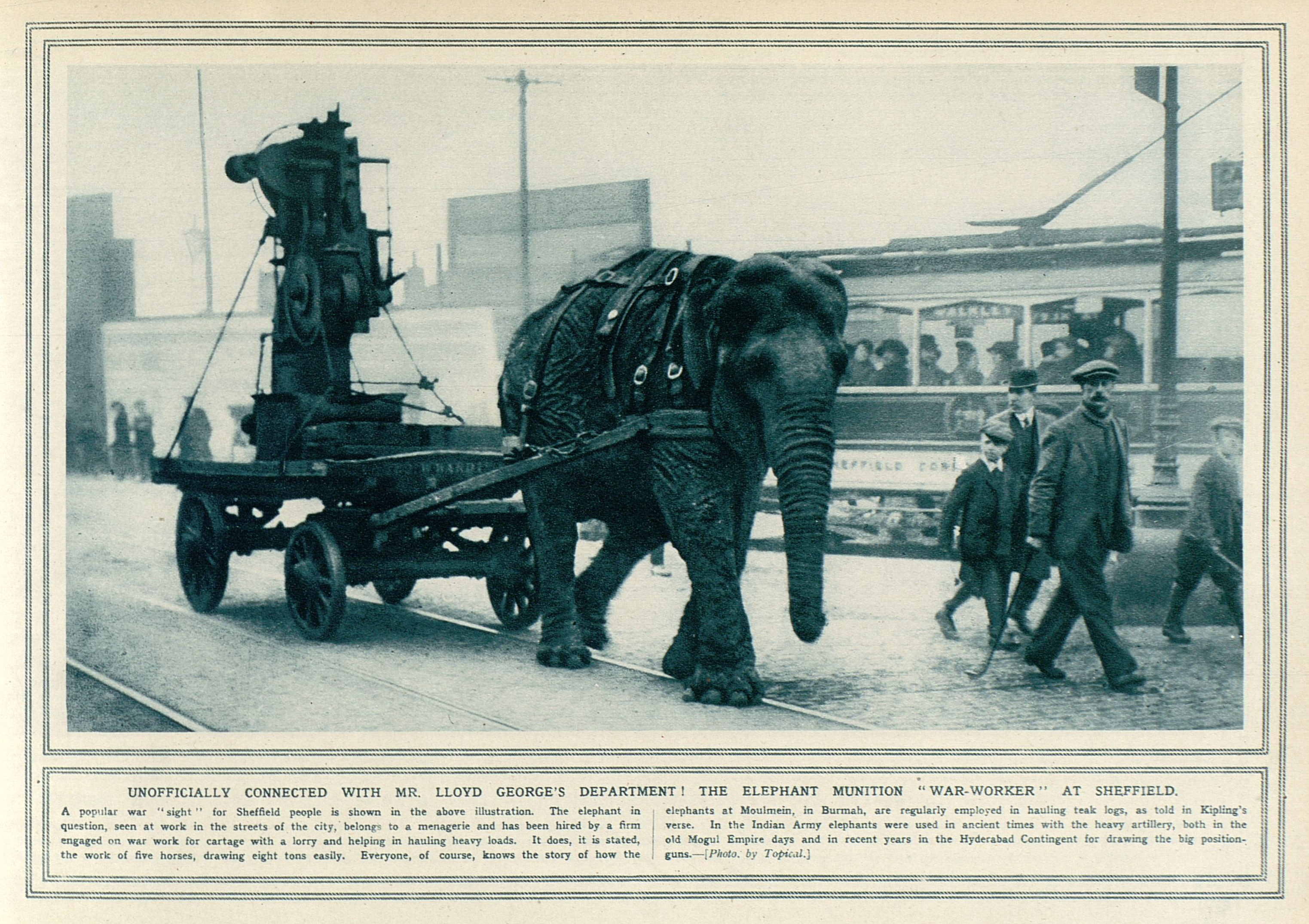
Our latest “Document of the Week” was chosen by our former Marketing and Editorial Assistant, Laura Wales. It is a photograph of an elephant hauling a heavy load through the streets of Sheffield. The photograph appeared in The Illustrated War News on 9 February 1916.
During the First World War, many horses and draught animals were requisitioned by the British Army for use on the front lines. This created a shortage of working animals at home, particularly for tasks like hauling heavy loads in industrial cities.
T. W. Ward & Co., who specialised in scrap metal and the manufacture of machinery, sought an unconventional alternative for transporting their goods in wartime. Lizzie the Indian elephant was part of Sedgwick's Travelling Menagerie. When war broke out she was conscripted for “helping in hauling heavy loads”. She could do the work of “five horses, drawing eight tonnes easily” which solved the firm’s horse shortage. She was regularly seen trudging through the streets surrounding the company’s base at Albion Works in Attercliffe, with chains around her shoulders, attached to massive loads.
Lizzie was given special leather boots to protect her feet from the scrap metal in the steelyard. She struggled with the cobbles, however. Locals knew her to be mischievous, often pinching food from open windows or commandeering the hats of passing schoolboys with her trunk. She was nicknamed “Tommy Ward’s Elephant”, which inspired the expression commonly used in Sheffield “done up like Tommy Ward’s elephant”, when someone is carrying something heavy.
She became a local hero of wartime work—she represented the resilience and adaptability of the community in a time of national crisis. Today, she is remembered fondly in the area and is commemorated by a blue plaque. There is even a Sheffield bus named in her honour.
Where to find this document
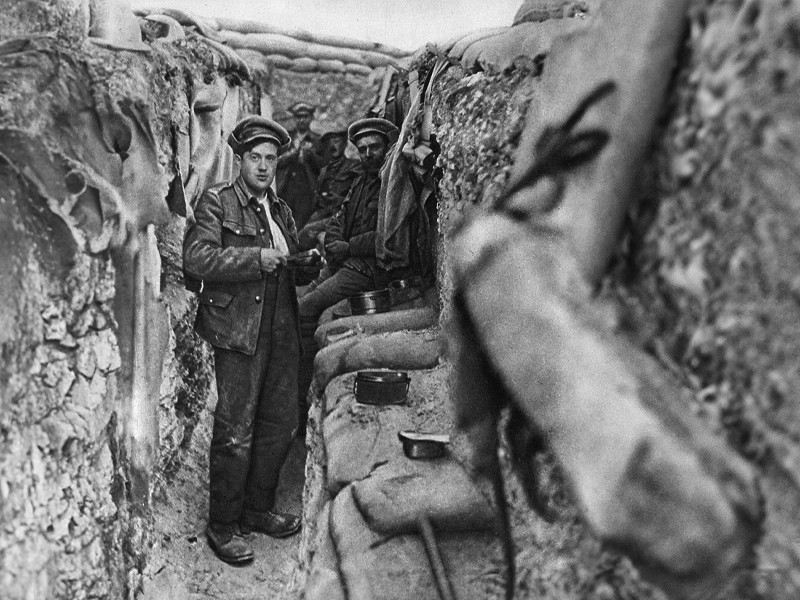
This piece comes from our primary source collection, The Illustrated War News, 1914–1918 & 1939. Consisting of nearly 8,600 images, it brings together editions of the IWN that were published weekly during the First World War (1914–1918) and briefly throughout November 1939, during the Second World War, as an offshoot of The Illustrated London News. The IWN covered a range of topics, including military enlistment, battles, and new weaponry, as well as pieces on the home front, prisoners of war, and social and cultural experiences of war. Visit the collection page to learn more.
If you would like to read more about the role of animals in the First World War, you can read Laura’s article “From the Archive: From War Horse to Winnie the Pooh – The Animals of the First World War” on our website.