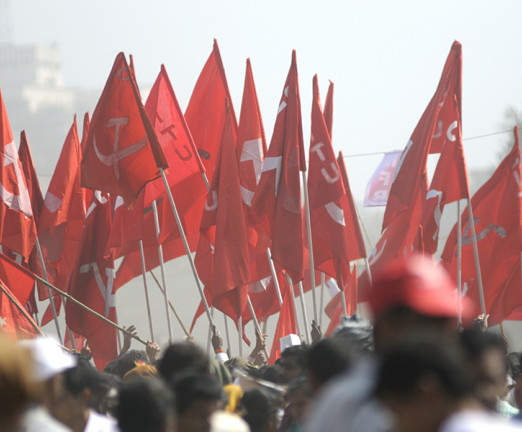
The Communist Party has been a freely elected governing party in India more times than anywhere else in the world and it remains a mass party in India to this day. The Meerut Conspiracy Trial was an early turning point in its history.
Professor John Callaghan, University of Salford.
Access the full collection
Access the full archive of Indian Communists and Trade Unionists on Trial: The Meerut Conspiracy, 1929–1933.
Delve into the Meerut Conspiracy Case in British India
The Meerut Conspiracy Case was a controversial legal saga that played out in British India between 1929 and early 1933. It began with the arrest and subsequent trial of twenty-nine trade unionists, including three Englishmen. It was alleged that they had attempted “to deprive the King Emperor of the sovereignty of British India”. They were charged under Section 121A of the Indian Penal Code. Containing over 10,000 images, this collection includes petitions and resolutions in support of the Meerut prisoners and the wider Indian labour movement. It includes papers from Indian police intelligence files, such as surveillance reports, alongside writings by the defendants, including Philip Spratt and Lester Hutchinson, as well as the papers of William Gillies and Benjamin Francis Bradley.
The case was symptomatic of the British government’s fear of the spread of communist and socialist ideas. There was a widespread belief that Marxist ideology, propagated amongst workers by trade unionists and the Communist Party of India (CPI), would undermine British rule. Ultimately, twenty-seven trade union leaders were convicted. Rather than curbing communist activism, however, the trial gave the defendants a powerful public platform, helping to strengthen the CPI’s position within Indian politics.
Drawn from the holdings of the Labour History Archive & Study Centre and the Working Class Movement Library, this collection reveals how the British left responded to one of colonial India’s most significant political trials.
Contents
Indian Communists and Trade Unionists on Trial: The Meerut Conspiracy, 1929–1933...
Licensed to access
Miscellaneous Papers and Correspondence Relevant to the Trial
This document contains various reports and correspondence regarding delays to the High Court proceedings. Confidential discussions of evidence against the accused, garnered through surveillance tactics, are also included.
Licensed to access
Meerut Prisoners—Resolutions
This document contains correspondence between Indian trade unionists and the Labour Party. These sources evidence how members of British trade unions and guilds were concerned about those arrested in the Meerut Conspiracy.
Licensed to access
Letters from Ben Bradley in India—Mainly to his Parents and Brother
The Communist Party of Great Britain (CPGB) dispatched Benjamin Bradely to India in 1927 to promote trade unionism. He was arrested in 1929 and sentenced in 1932. This document contains letters by Bradley detailing court procedures. His correspondence illustrates that he was aware of how the prosecution was preventing the accused from exerting influence over the trial.
Licensed to access
Lester Hutchinson, "Conspiracy at Meerut" (1935)
Lester Hutchinson was a British journalist. His father was a supporter of the Socialist Labour Party and his mother was a founding member of the CPGB. Lester was arrested during the conspiracy. This document details his thoughts on the affair.
Insights
The Meerut Conspiracy led to a four-year court case held at the Court of Meerut. The drawn-out nature of the proceedings provided those accused with a platform to promote their communist ideas and values . As such, a large number of the documents in this collection detail efforts on the part of the British Raj to counteract delays.
Benjamin Bradley worked as an engineer in India supervising a large workshop. Shocked by the working conditions and low wages, Bradley joined the Communist Party of Great Britain and became heavily involved in the Indian trade union movement. He was arrested for anti-government activities in 1929 and sentenced in 1932.
This collection contains an assortment of petitions and resolutions in direct support of the Meerut prisoners and of the Indian labour movement as a whole. The resolutions originate from a range of workers’ organisations across Britain, including trade unions based in Newcastle, Birmingham, Swansea, and multiple branches of the Women’s Cooperative Guild.
Lester Hutchinson was a journalist whose parents were active within the British left. Whilst visiting India he encountered Ben Bradley and other communist personalities, such as M. N. Roy. Hutchinson was arrested as part of the Meerut Conspiracy but released on bail alongside R. S. Nimbkar. In 1945 he became Labour MP for Manchester Rusholme.
The Communist Party has been a freely elected governing party in India in states such as Kerala and West Bengal more times than anywhere else in the world and it remains a mass party in India to this day. The Meerut Conspiracy Trial was an early turning point in its...
Read more →


-800x600.jpg)
-800x600.jpg)
-800x600.jpg)
-800x600.jpg)