This record collection provides extraordinary levels of detail about patients of the Bethlem Royal Hospital dating as far back as the 17th century, providing real insight into what life was like in this infamous institution.
Myko Clelland,
Historian.
Access the full collection
Access the full archive of Records from Bethlem Royal Hospital, 1559–1932.
Learn how a London psychiatric hospital conceptualised, diagnosed, and treated mental illness from the sixteenth to the twentieth century
Bethlem Royal Hospital is a psychiatric facility in London. It was established as a priory of the Order of St Mary of Bethlehem in 1247, before beginning to care for mentally ill patients sometime in the 14th century. Often referred to colloquially as ‘Bedlam’—and generally accepted to be the origin of the very same noun—past incarnations of the institution were infamous for their questionable diagnosis of mental illness and poor treatment of patients.
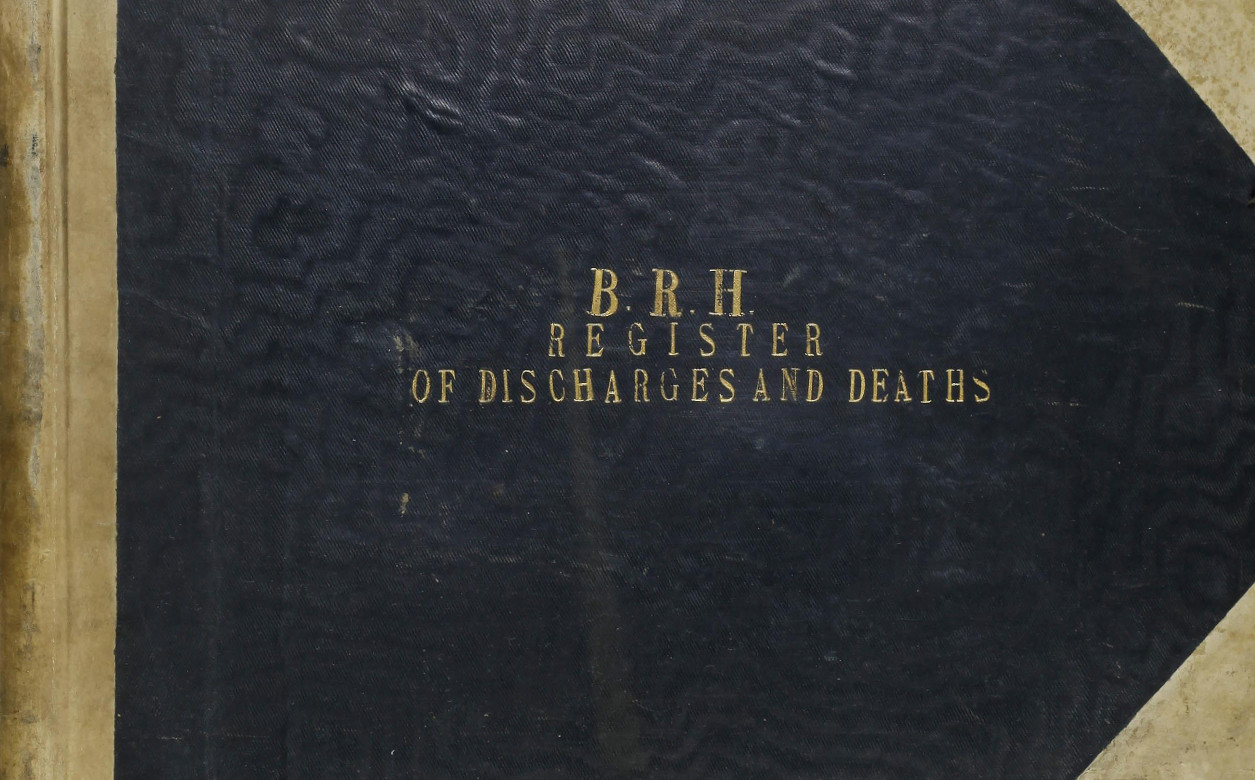
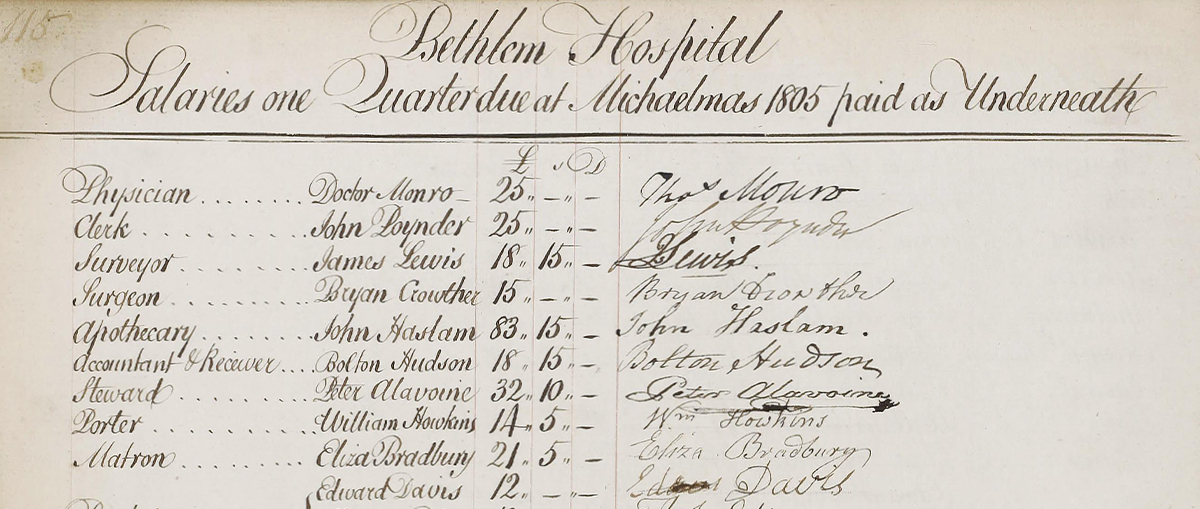
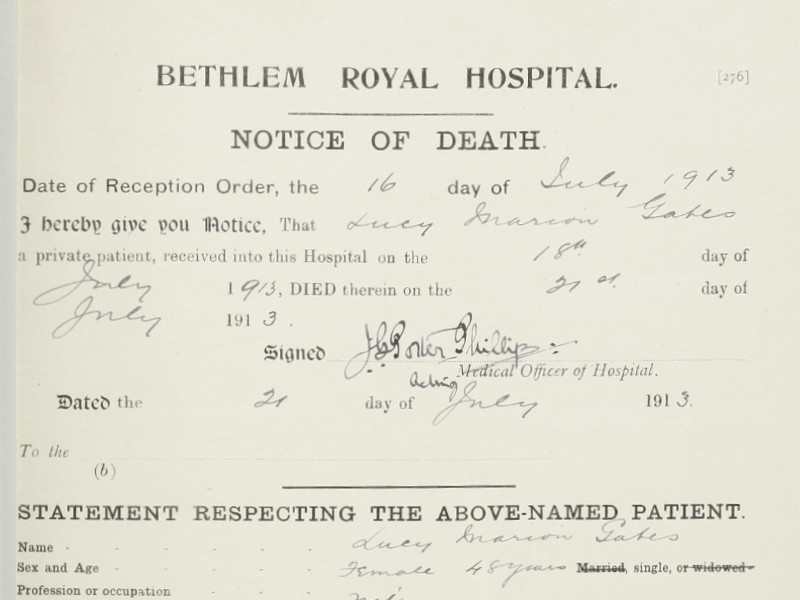
This collection, which has been curated in association with Findmypast and the Museum of the Mind, contains four centuries' and 130,000 images' worth of records from Bethlem. The records are diverse in both form and subject matter. They include: voluntary and criminal admission registers; discharge and death registers; male and female patient casebooks; minutes of the Court of Governors; and staff salary books. All handwritten items have been fully transcribed.
Scholars and students alike will find that, together, the records provide a unique insight into the evolution of so-called lunacy laws—from an early reliance on control of the mentally ill through coercion and restraint to the later emergence of doctrines of self-discipline and moral management.
Content Warning:This collection contains racist or offensive terms. Owing to their historical importance, the sources are in their original state. Please read our Sensitivity Statement for more information.
Licensed to access
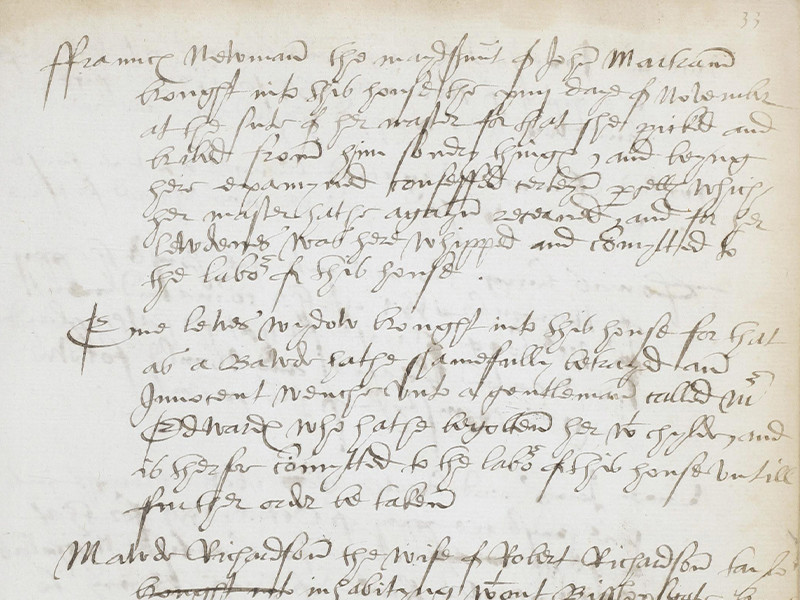
BCB-01 - Minutes of the Court of Governors, 1559-1562
Governors were responsible for the appointment of staff, as well as the management of hospital properties and finances. These minutes from the mid-16th century shed light on their approach to general administration and the care of patients at the original Bishopgate facility.
Licensed to access
ARA-11 - Admission registers, 1748-1775
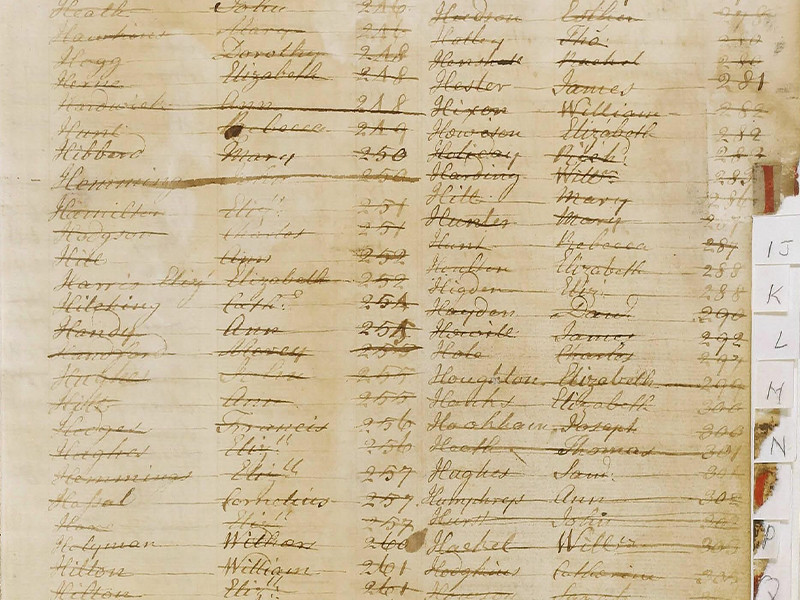
These admission registers were compiled during a period when Bethlem was a significant tourist attraction. They include the patient’s name, admission date, death or discharge date, occupation, and security—i.e., those paying or liable for their stay in hospital.
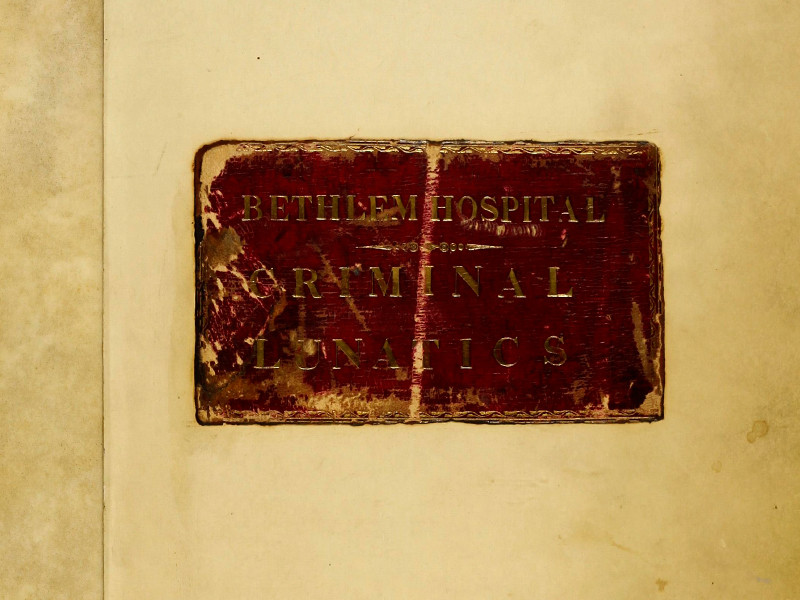
These casebooks include records of “incurable and criminal” patients admitted to Bethlem during the height of efforts to reform lunacy laws. They list the patient’s name and admission date, as well as a description of their illness and observations on their behaviour.
Licensed to access
CB-199 - Female patient casebooks, 1913
These casebooks provide a comprehensive overview of female mental health and health care on the eve of the First World War. They include the patient’s name, admission date, a description of their illness, and observations on their behaviour, as well as a range of other pertinent information.
Insights
The original Bethlem Royal Hospital, or Priory of St Mary of Bethlehem, was located near Bishopsgate on the outskirts of the City of London.
The hospital’s archives are deposited at the Bethlem Museum of the Mind. These archives also comprise material from other British psychiatric institutions such as Warlingham Park Hospital. This collection contains patient casebooks compiled by Warlingham during the period 1903-1913, when it was known as Croydon Mental Hospital.
For much of its history, Bethlem was one of Britain’s only dedicated psychiatric hospitals, and arguably its most notorious. Indeed, conditions were so bad that its moniker, Bedlam (the Jacobean pronunciation of Bethlem), came to mean “a scene of uproar and confusion” in the common English vernacular.
Bethlem’s reputation was informed by a number of factors. Such factors included an archaic approach to medicine generally and mental health more specifically, unsanitary and prison-like patient accommodation, and the use of cruel, ineffective treatments, from rotational and cold-water therapies to bleeding and purging.
During the 18th century, the hospital even became a tourist attraction, with paying visitors permitted onto the wards to gawp at patients.
Campaigners had long sought to challenge these conditions and practises, but it was not until an 1815 Parliamentary inquiry brought them into sharp focus that the process of “lunacy reform” began in earnest. The plight of American seaman James Norris, who was restrained for a decade and whose records are contained within this collection, caused particular concern among legislators and members of the public. Since then, the treatment of mentally ill patients—at Bethlem and beyond—has gradually improved.
Bethlem Museum of the Mind records the lives and experience and celebrates the achievements of people with mental health problems. Situated within the current day site of Bethlem Royal Hospital, the oldest psychiatric hospital in Europe, the Museum seeks to explore and discuss issues around mental health, both in the...
Read more →
![The Hospital of Bethlem [Bedlam] at Moorfields, London: seen from the north, with sheep grazing and people walking in the foreground. Coloured wood engraving by W. H. Prior.](https://d1sxy7l4fhu207.cloudfront.net/uploads/staging/1715/BOA_RBRH_Hero2_1629884837.jpg)
![The Hospital of Bethlem [Bedlam] at Moorfields, London: seen from the north, with sheep grazing and people walking in the foreground. Coloured wood engraving by W. H. Prior after an earlier engraving.](https://d1sxy7l4fhu207.cloudfront.net/uploads/staging/1893/conversions/BOA_RBRH_Card_1636545982-522x432.jpg)