According to the party rules adopted in 1943, it was renamed the Executive Committee (EC) and exercised "full responsibility for the direction and control of the Party's work" including control of the party press, publications, and other enterprises.
Professor Kevin Morgan, University of Manchester
Access the full collection
Access the full archive of Democratic Centralism during the Cold War, 1943–1991.
Study party discipline and loyalty to the Soviet Union during the Cold War
Modelled on the Soviet Union’s Central Committee, the Executive Committee (EC) functioned as one of the highest organs of the Communist Party of Great Britain (CPGB). In line with the CPGB constitution, the EC met on a bi-monthly to carry out the decisions made by the annual National Congress. In practice, the EC functioned as a monolithic authority that enforced the rigid tenet of democratic centralism. This was a Leninist principle that stated that once a decision had been made collectively, party members were bound to accept and support it. The EC often used this tenet, as well as its influential position in appointing committee members, to maintain an iron-clad grip on the CPGB.
The content featured in this collection, including minutes, handwritten notes, and reports, is drawn from monthly Executive Committee meetings and largely focuses on the politics of the Cold War and the direction of the party. As such, the collection offers a range of communist perspectives on unfolding events in Britain and abroad, from key events during the Cold War to contentious issues over internal party discipline.
Contents
Democratic Centralism during the Cold War, 1943–1991...
Licensed to access
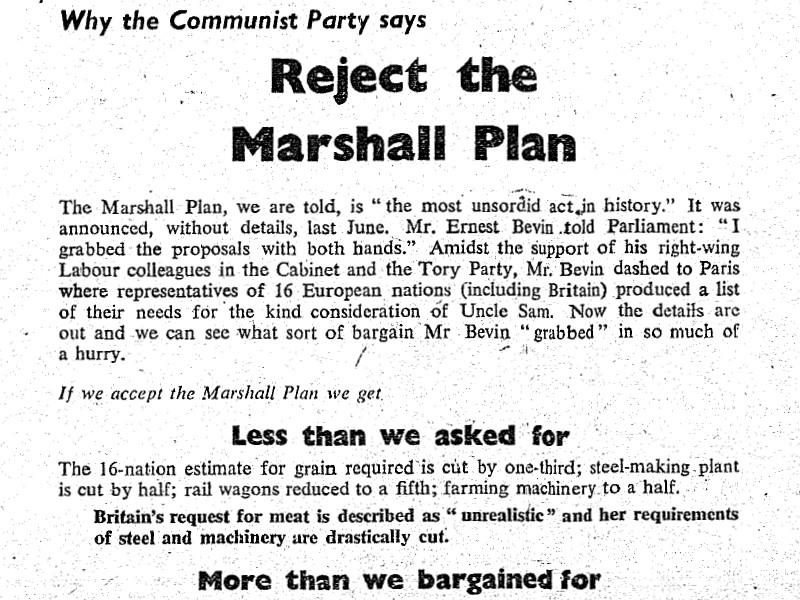
Filling the power vacuum in Europe, 1947
Executive Committee minutes and adjacent material offer a perspective on events in war-torn Europe, as both the United States and the Soviet Union tried to fill the power vacuum following the collapse of the old European order.
Licensed to access
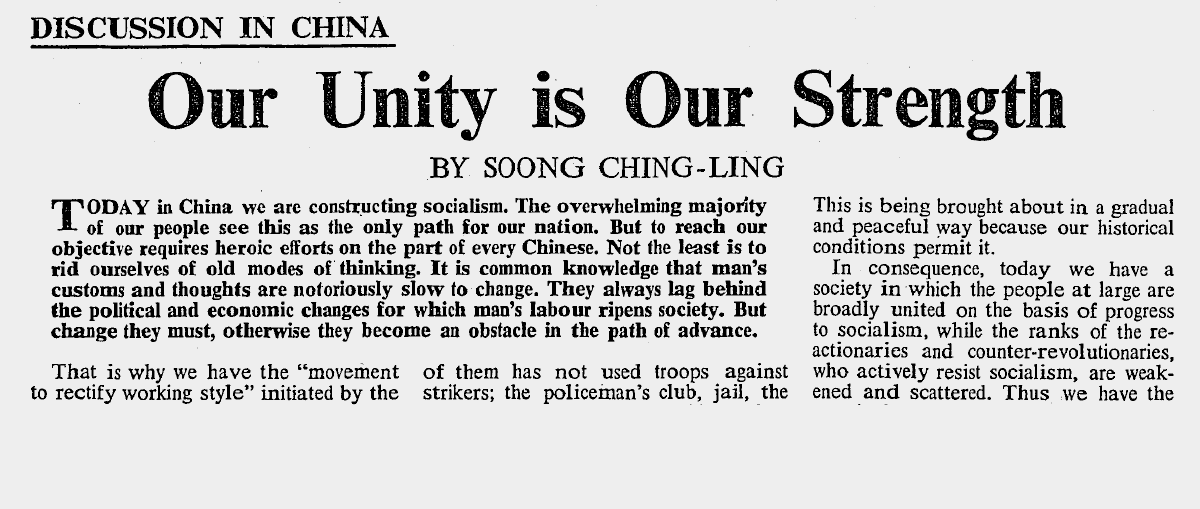
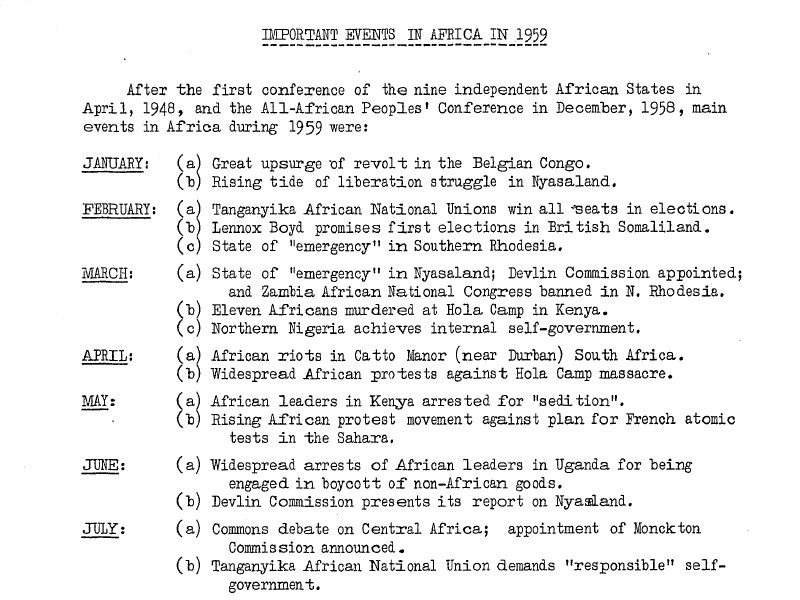
Decolonisation and the Sino-Soviet Split, 1960
This document offers Executive Committee perspectives on the decolonisation of Africa and its implications for the Cold War. It also includes information on fractures between the Soviet Union and China over their separate interpretations of Marxist-Leninism.
Licensed to access
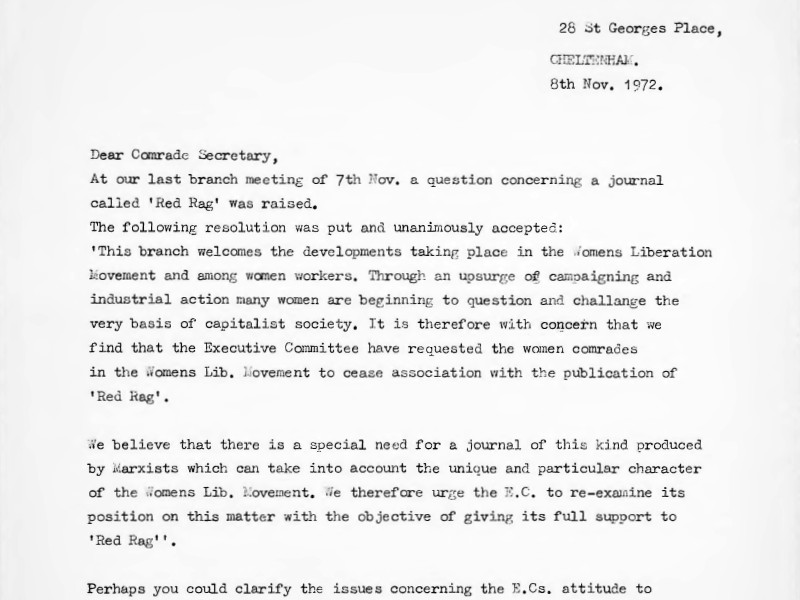
Disciplinary disputes over Red Rag, 1972
Amidst the onset of growing factionalism within the CPGB, the Executive Committee brought disciplinary proceedings against the authors of a new feminist magazine Red Rag. This episode demonstrates the nature of the centralised party apparatus and its inability to tolerate spontaneous deviation from the party line.
Licensed to access
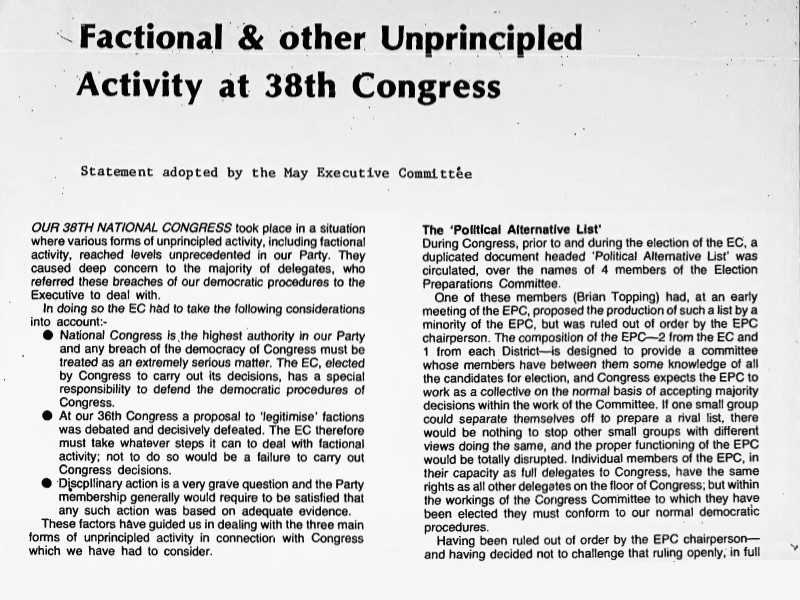
Factionalism and terminal decline, 1984
Featured minutes and reports from the Executive Committee demonstrate the increasing dysfunction at the heart of the CPGB, as 'tankies' and Eurocommunists wrestled for control over their party.
Insights
Material from the Executive Committee offers a complete run of minutes and adjacent files from 1943 until 1991.
The collection reveals the intimate relationship between National Congress and the Executive Committee. The EC was subordinate to the decisions of the National Congress but played a pivotal role in organising and scrutinising resolutions submitted to National Congress.
As such, the Executive Committee often acted as the de facto authority within the CPGB. This meant having the final say on party discipline and member expulsion, which usually proceeded on a factional basis in line with the tenet of democratic centralism.
Much of the material dates to the Cold War, with the Executive Committee wrestling with decolonisation, fractures in the international communist movement, and proxy conflicts between the United States and the Soviet Union.
Typescript minutes are often brief and lacking in detail, owing to the fact that revolutionary-minded CPGB took precautions against their high-level decision making being extensively documented.
Personal handwritten notes from Executive Committee meetings offer a more fruitful and revealing look at the nature of CPGB activity.
Individual deposits within the CPGB archives are significant both for the biographies of the individuals concerned and as a record of the wider activities of the party and its ancillaries. The dividing line between these materials and the party's institutional records is indeed extremely blurred. Even in the post-war decades,...
Read more →
Professor Kevin MorganPublished 20th January, 2020
Stalin, to go by a famous throwaway remark, had little time for 'archive rats'. Certainly, in his day and long afterwards the nosing out of archival detritus was an activity largely denied the historians of communism. In most cases, this was as true of the communist parties set up internationally...
Read more →
Professor Kevin MorganPublished 20th January, 2020
The singular nature of the CPGB's relationship with the Communist International means that the organisational holdings of the archives in Britain are of a highly asymmetrical character. Discrete groups of documents from the inter-war years, some of considerable historical significance, appear to have been retained by individuals and deposited in...
Read more →
Professor Kevin MorganPublished 20th January, 2020