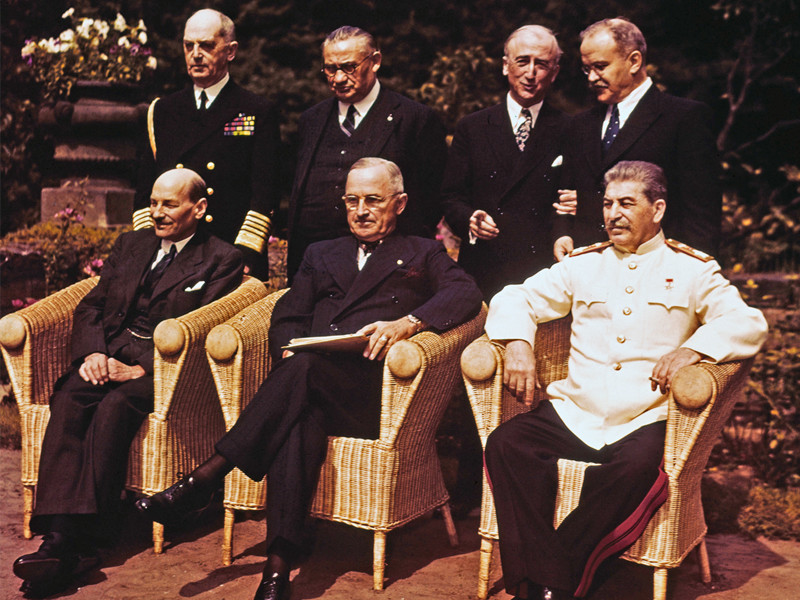
Explore Britain’s efforts to eliminate Nazism and foster democracy among the German people in the wake of the Second World War.
As the Second World War entered its final year, and the Allied victory looked secure, a growing number of British officials began to consider the future. Alongside their Allied counterparts, they explored ways to ensure that Germany would emerge as a stable, peaceful, and democratic nation. An unprecedented and largely experimental programme of political re-education, aimed at the German people, both Prisoners of War (POWs) and civilians, became central to this endeavour. At special facilities throughout Britain and its empire, large numbers of Germans were subject to a carefully curated course of lectures, film screenings, readings, cultural activities, field trips, and more.The aim was to instil a set of values and ideas which the British believed would be conducive to the emergence of a safe and prosperous Germany.
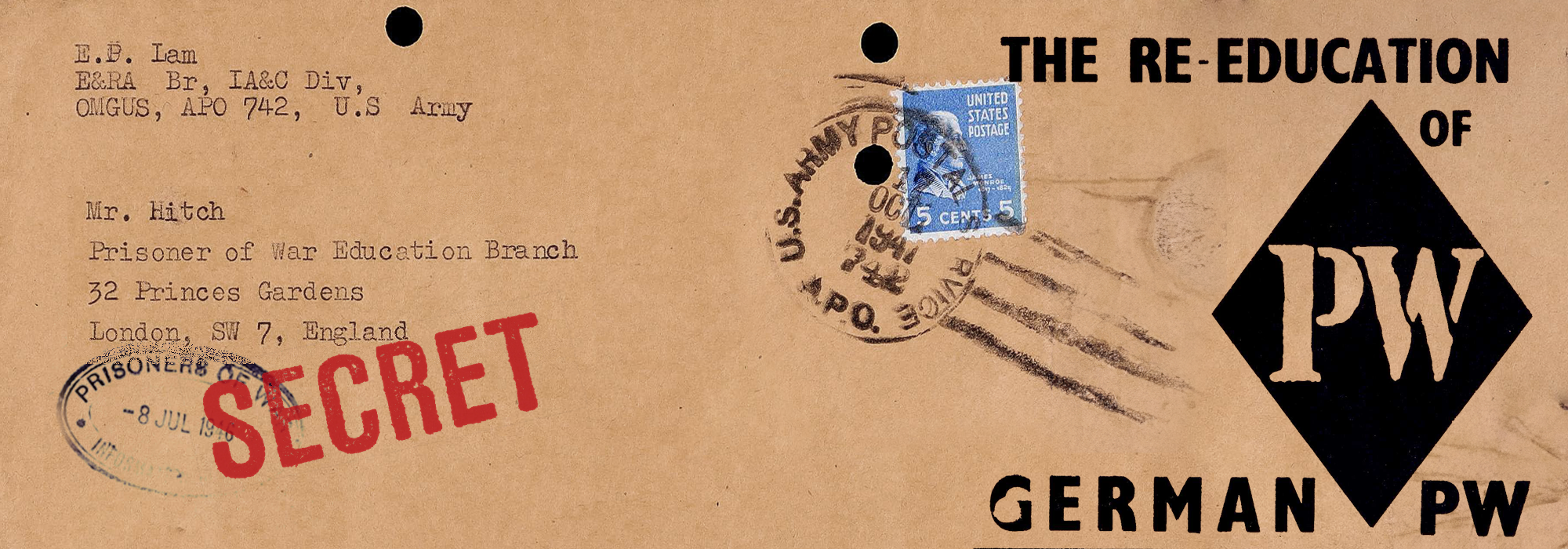
Building a New Germany: Denazification and Political Re-education, 1944–1948 comprises over 3,700 images, drawn from 46 files in the FO 939 series at The National Archives (UK). The collection explores the policy of re-education from a number of angles. It surveys the high-level government decisions that instigated and framed this innovative process. The documents likewise offer examples of the official guidance and instructions that were sent to camp authorities. You will also find descriptions of the course materials used, reflections of lecturers and educators involved in the process, and the views of the German POWs themselves. The collection offers fascinating insights into British perspectives on extreme ideologies, as well as into concepts of political control and indoctrination, including strategies on how to reverse them. Building a New Germany explores a key transitional period when the British tried to reshape Germany from foe to friend.
This collection will be of value to students and scholars with interests in post-war Europe, ideology, and the social history of conflict and dictatorship. It likewise offers insights into collective psychology, the construction of citizenship, and the processes of peace-making and nation-building.
Contents
Building a New Germany: Denazification and Political Re-education, 1944–1948...
Licensed to access
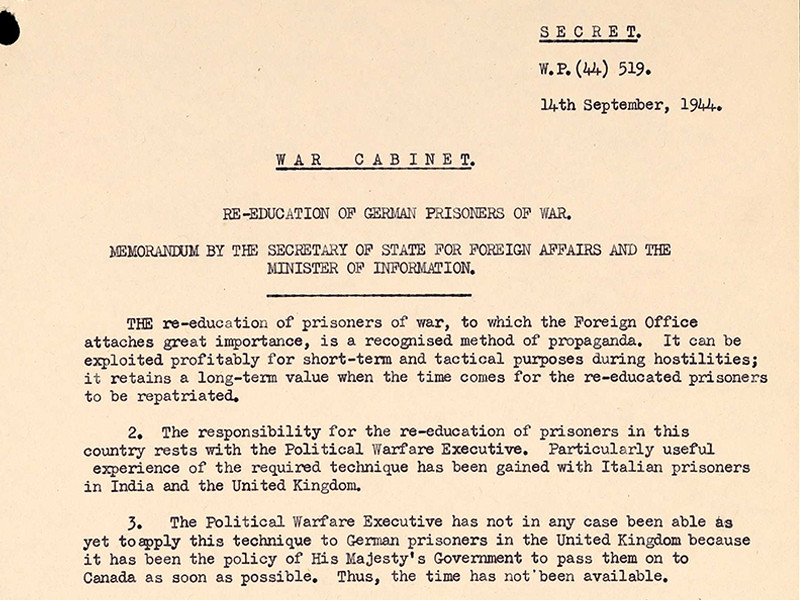
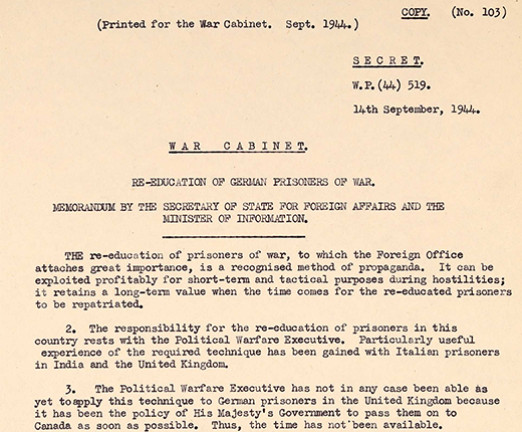
War Cabinet Memorandum on Political Re-Education Policy, 1944 (FO 939/445)
The original decision, taken in May 1944, to undertake the re-education of POWs had two aims. The short-term goal was to aid political warfare and propaganda efforts. The long-term goal was to transform POWs into “pro-Allied advocates of democratic ideals”.
Licensed to access
Guidelines for Commandants of Political Re-Education Centres, 1945 (FO 939/214)
This document originally appeared under the heading “Making Nazis Human”. It set out the aims, methods, materials, and conditions of the re-education policy. These guidelines offer insights into the workings of POW camps.
Licensed to access
POW Reactions to a Documentary on the Concentration Camps, 1945 (FO 939/72)
A British-made documentary about the Nazi concentration camps was used extensively as a re-education tool. The responses of German audiences were closely monitored. Some dismissed the film as mere propaganda; others were “shocked into utter silence”.
Licensed to access
Reports on the Character and Attitudes of German Internees, 1947 (FO 939/349)
Careful tabs were kept on the attitudes and views of German POWs, especially those considered to be committed Nazis or militarists. Their morale and performance whilst on the re-education course were likewise monitored.
Insights
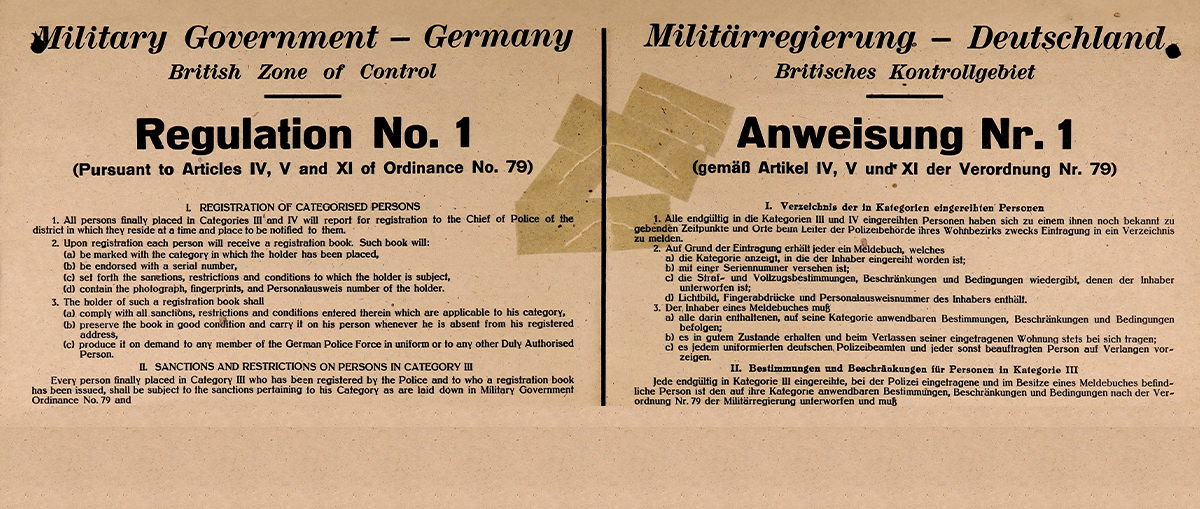
When the Allies (Britain, France, the Soviet Union, and the United States) occupied Germany at the end of the Second World War, they sought to eradicate every trace of Nazism and militarism from German life and to prevent their re-emergence.
The process of denazification (in its broadest definition) ran from the purely superficial, such as the renaming of streets and buildings, to the much more substantive, such as the re-education of German citizens. This latter endeavour is surveyed in these records.
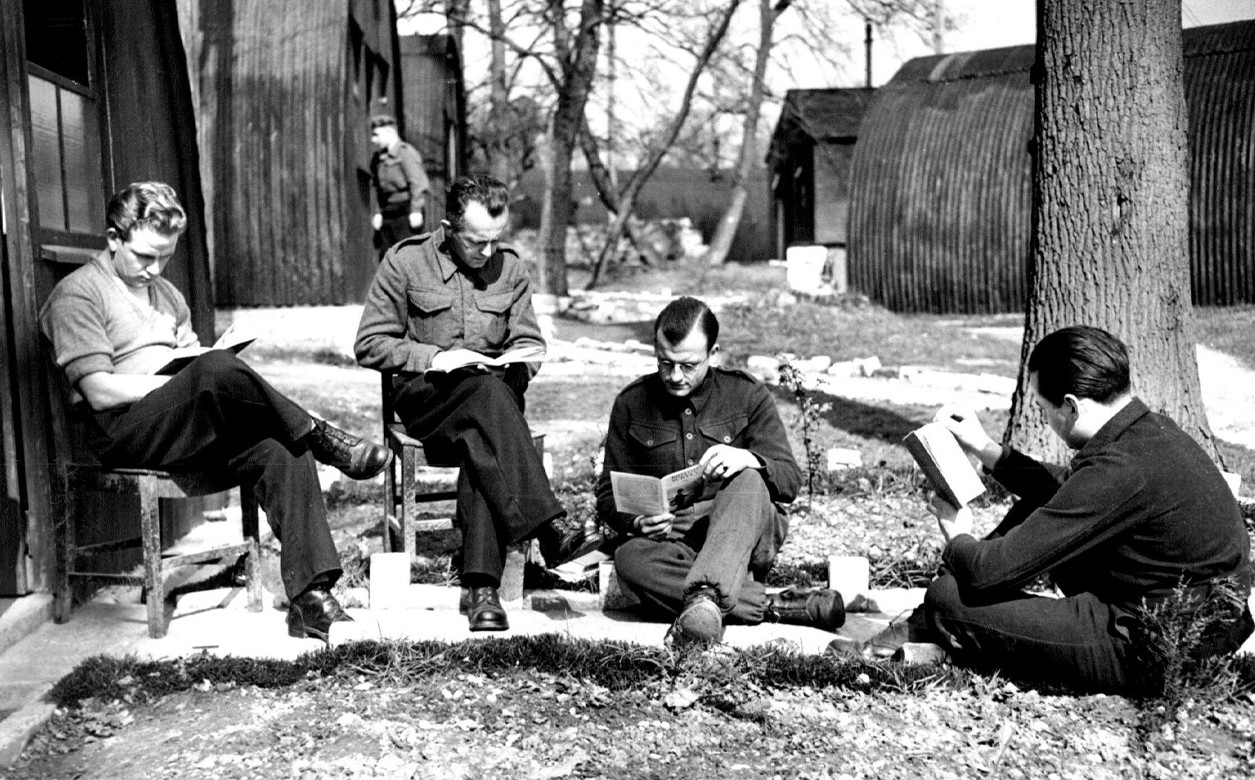
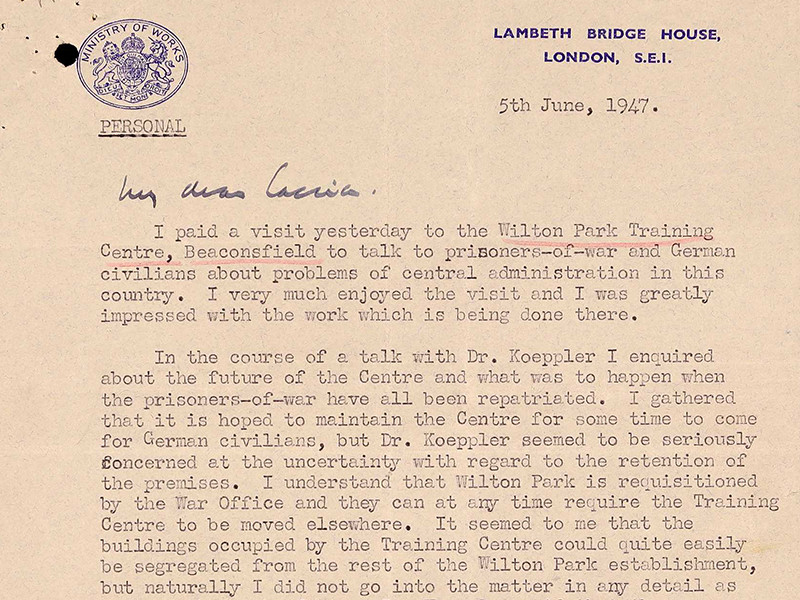
The first targets for denazification were Prisoners of War (POWs) housed in camps in Britain and across the empire. A dedicated re-education centre was established at Wilton Park in Buckinghamshire. It was founded and run by Heinz Koeppler, a German-Jewish émigré. Koeppler wanted the centre to have the feel of a residential college, rather than that of a prison.
The content of the re-education programme included lectures from such esteemed speakers as Bertrand Russell, William Beveridge, and Nancy Astor. There were also discussions about citizenship, liberty, democracy, and the British way of life. Screenings of films about the horrors of the Nazi regime, especially the Holocaust, likewise featured.
Tens of thousands of Germans passed through the British political re-education programme. Many of them went on to play prominent roles in the political life of post-war Germany. Willi Brundert, who later became Mayor of Frankfurt, stated that the programme “gave us Germans the possibility to become partners.”
On 18 December 1939, Viscount Halifax (Secretary of State for Foreign Affairs) circulated “an interesting memorandum” among the War Cabinet. Prepared by the Department of Enemy Propaganda, the missive provided information on German Prisoners of War (POWs) and interned enemy aliens in Great Britain.
Read more →
Our latest “Document of the Week” was chosen by our Senior Curator, Dr. Charlie Hall. It comprises a report written by the Political Division of the British occupation authorities in Germany in 1947.
Read more →
Britain’s attempt to “re-educate” Prisoners of War (POWs) belonged to a suite of measures aimed at eradicating German militarism and Nazism.
Read more →





.svg)