Our New Purchasing Scheme is Open! Until 31 July 2026, grab a 20% discount on 20 of our most popular collections! ✕
The Collapse of the Ottoman Empire and the Partition of the Middle East, 1879–1919

The personal and professional papers of Sir Mark Sykes, 1879–1919
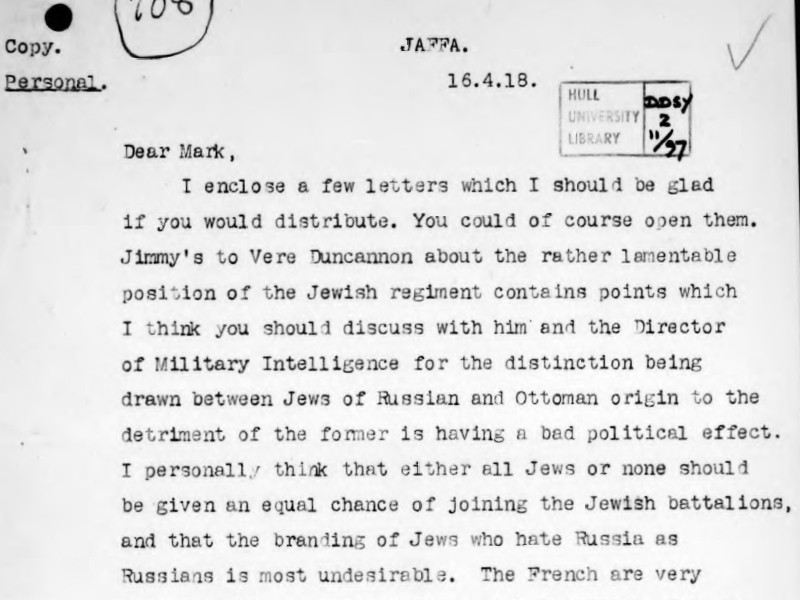
The Jews seem... loyally pro-British. Naturally they want deeds and acts to show that the Balfour declaration is not just a scrap of paperGilbert Clayton,
Access the full collection
Access the full archive of The Collapse of the Ottoman Empire and the Partition of the Middle East, 1879–1919.
Institutional Free Trial
Start your free trialRegister for a free 30-day trial of The Collapse of the Ottoman Empire and the Partition of the Middle East, 1879–1919, for your institution.
Institutional Sales
Visit Sales PagesellFor more information on institutional access, visit our sales page.
Single User License
Purchase a license below to view the full collection.
Already have a license? Sign in.
Re-drawing the Middle East, the creation of Syria, Lebanon, Jordan, and Iraq.
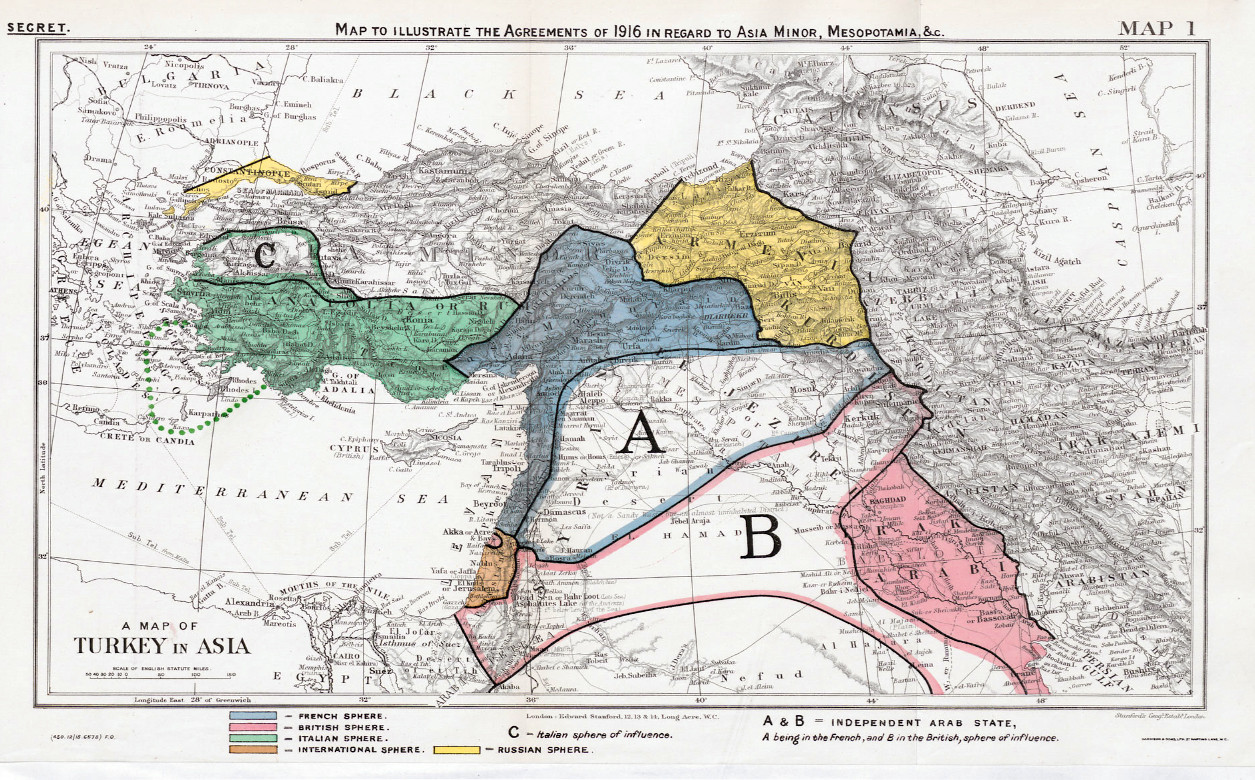
This collection is drawn from the personal papers of Mark Sykes (1879-1919), a politician and diplomatic advisor famous for his role in the partition of the Middle East around the period of the First World War. He is best known for his role in the Sykes-Picot Agreement of 1916, which was a secret treaty between European powers that divided up the Ottoman Empire in the face of its impending collapse.
In addition to material related to the Sykes-Picot Agreement, the papers focus on Sykes’ experience in military intelligence and diplomacy in the Middle East, both before and during the First World War. This includes touching on such historic events like the Armenian genocide as well as international debates around Zionism and the creation of a Jewish homeland. As an avid explorer, of a more personal nature are his notebooks, which offer an insight into the experience of an aristocratic traveler in the Middle East during the early 20th century.
Contents
The Collapse of the Ottoman Empire and the Partition of the Middle East, 1879–1919...
The personal and professional papers of Sir Mark Sykes, 1879–1919
Discover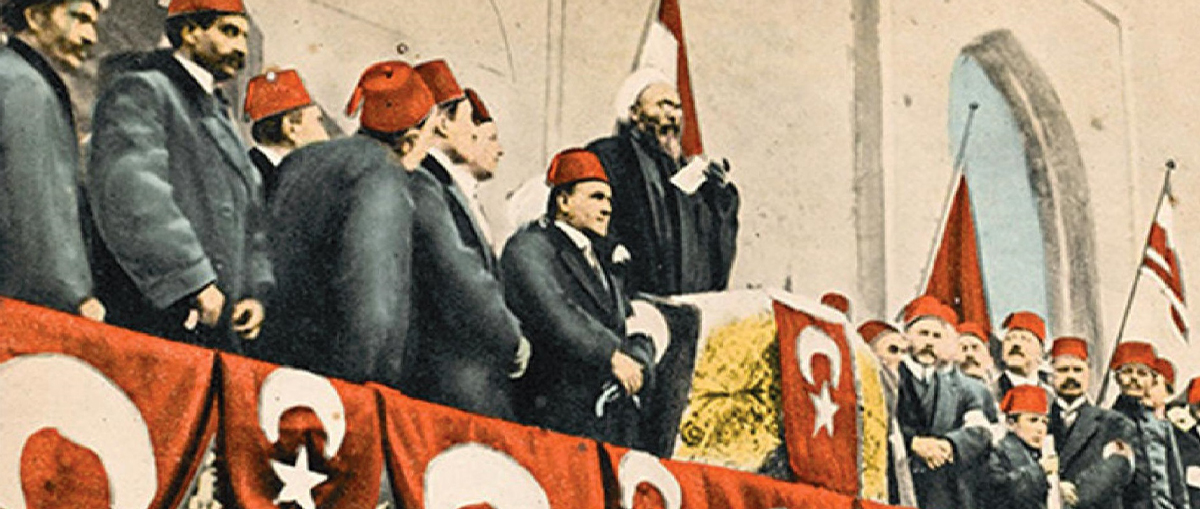
Highlights
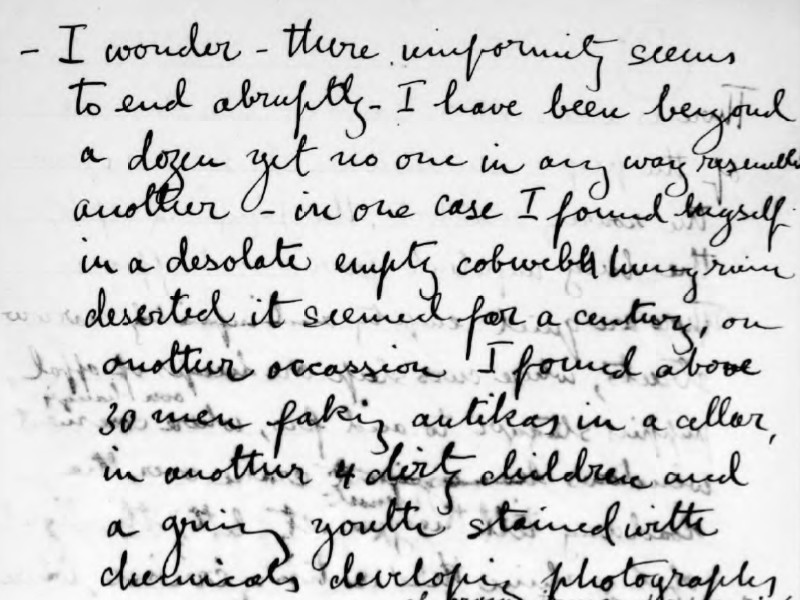
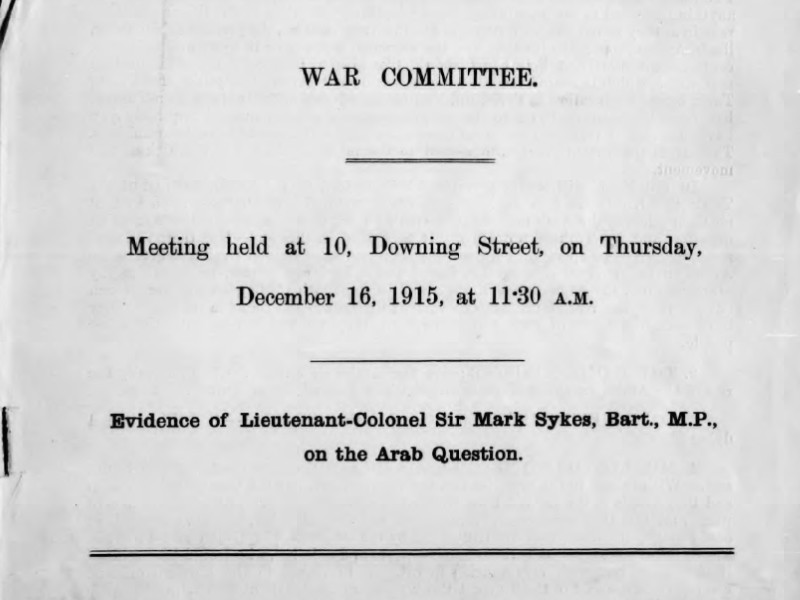
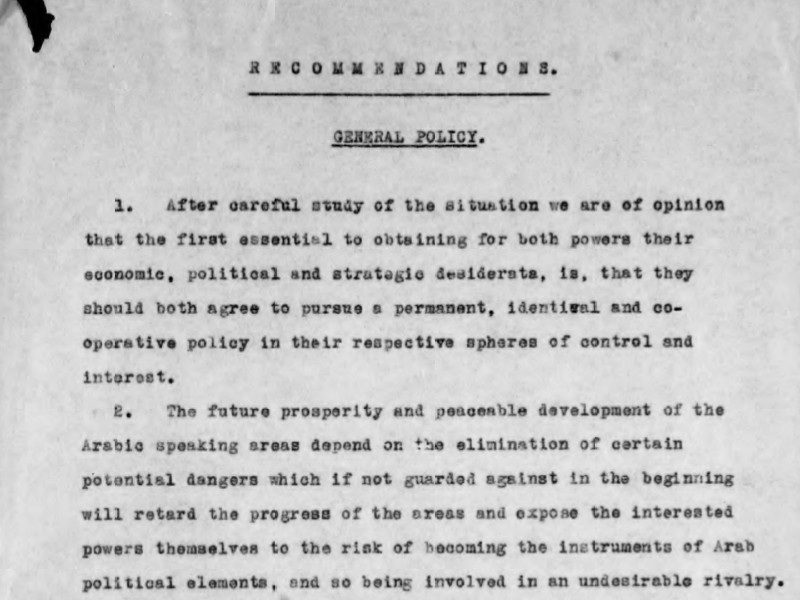
Licensed to access War Committee report on the ‘Arab Question’, 1915
Insights
- During the 19th century, the sprawling Ottoman Empire, which had dominated the Middle East for many centuries, was in its death spiral as a political entity.
Mark Sykes, whose papers form the basis of this collection, was the son of a British aristocrat and regularly travelled across the Ottoman Empire with his father.
- Western colonial powers, such as Great Britain and France, had a strong interest in assuming de facto control of Ottoman territory in the Middle East through ‘spheres of influence.’
- Sykes first worked as an assistant to Lord Kitchener during the First World War and would go on to play a decisive role in the international politics of the Middle East.
- Sykes’ influence stretches to both the Sykes-Picot Agreement, which formed the basis for the colonial partition of the Middle East by France and Britain, as well as the Balfour Declaration, in which the British government formally backed the establishment of a “national home for the Jewish people.”
- Whilst in France as part of the British contingent of the Paris Peace Conference, Sykes succumbed to ‘Spanish Flu’ and passed away.
Unlock Historical Research for Your Institution
Provide your students and researchers with direct access to unique primary sources.