Incarceration in Britain and its Empire Contextual Essays
At the end of the nineteenth century a series of empires began to use confinement as a policy against the enemy
Read more →

Our New Purchasing Scheme is Open! Until 31 July 2026, grab a 20% discount on 20 of our most popular collections! ✕
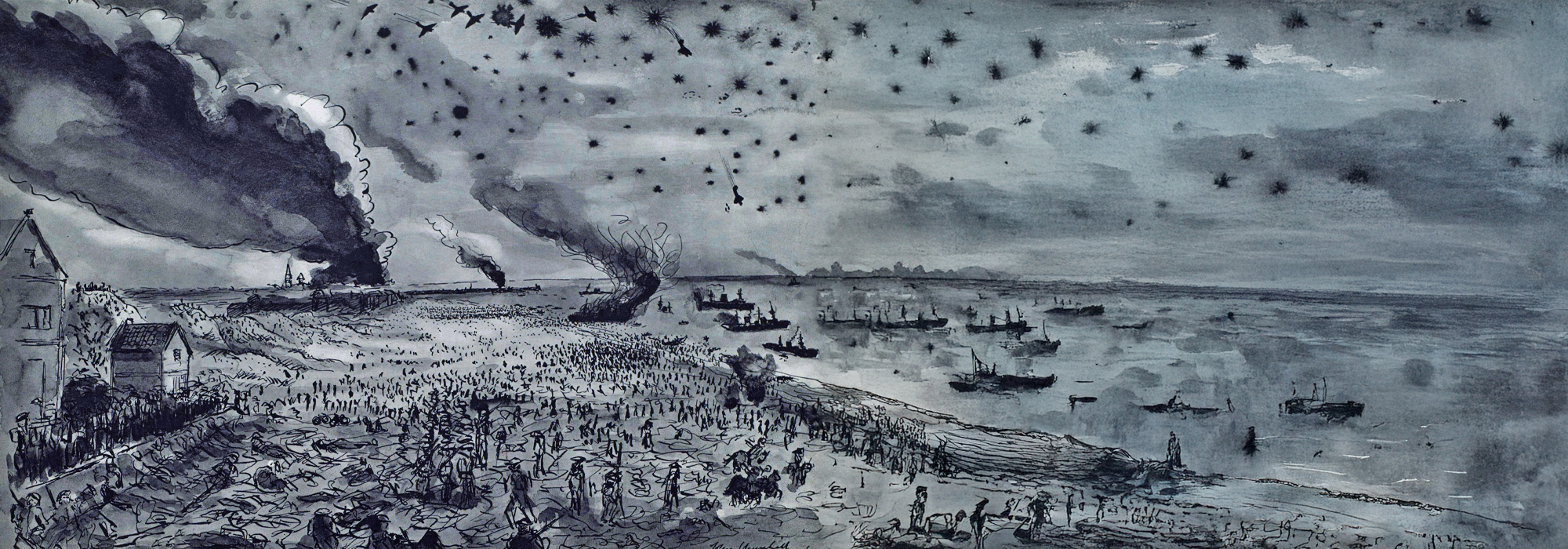
War without limits means suffering without end. And even war has rules.
Access the full archive of The Laws of War: Justice, Rights, and Ethics in Military Contexts.
Register for a free 30-day trial of The Laws of War: Justice, Rights, and Ethics in Military Contexts, for your institution.
For more information on institutional access, visit our sales page.
Already have a license? Sign in.
Throughout human history, societies, states, and nations have viewed military action as a necessary tool to help achieve their wider political, strategic, or ideological goals. The experience of warfare, for combatants and civilians alike, is often horrific. Destruction, chaos, and suffering are widespread. As a result, alongside grander endeavours to end war altogether and to create lasting peace, more pragmatic efforts have emerged to impose laws, rules, and ethical frameworks upon the conduct of war so as to mitigate the misery and collateral damage that it causes.
These efforts have increased exponentially since the end of the eighteenth century. As conflicts grew in scale and impact, as mass citizen armies took to the field, and as questions of human rights gained traction, the need for robust laws of war became ever clearer. By appearing to contain and regulate the impact of warfare, these rules also served to legitimise, and even to justify, military action in increasingly democratic societies.
Containing over 100,000 images from The National Archives (UK), this collection shows that the laws of war could take many forms. These range from overarching grand ideas about when it is, or is not, legitimate to declare war, through policies designed to secure and safeguard civilians in times of conflict, and down to the mechanisms of courts martial, which have sought to apply a distinctive conception of justice to the relative mayhem of warzones. This collection will be of interest to historians, legal scholars, criminologists, and defence and strategic studies experts—its contents reveal much about attitudes towards warfare over the last 300 years and the extent to which efforts to regulate it have succeeded or failed.
The moral, legal, and political dimensions of modern warfare
Discover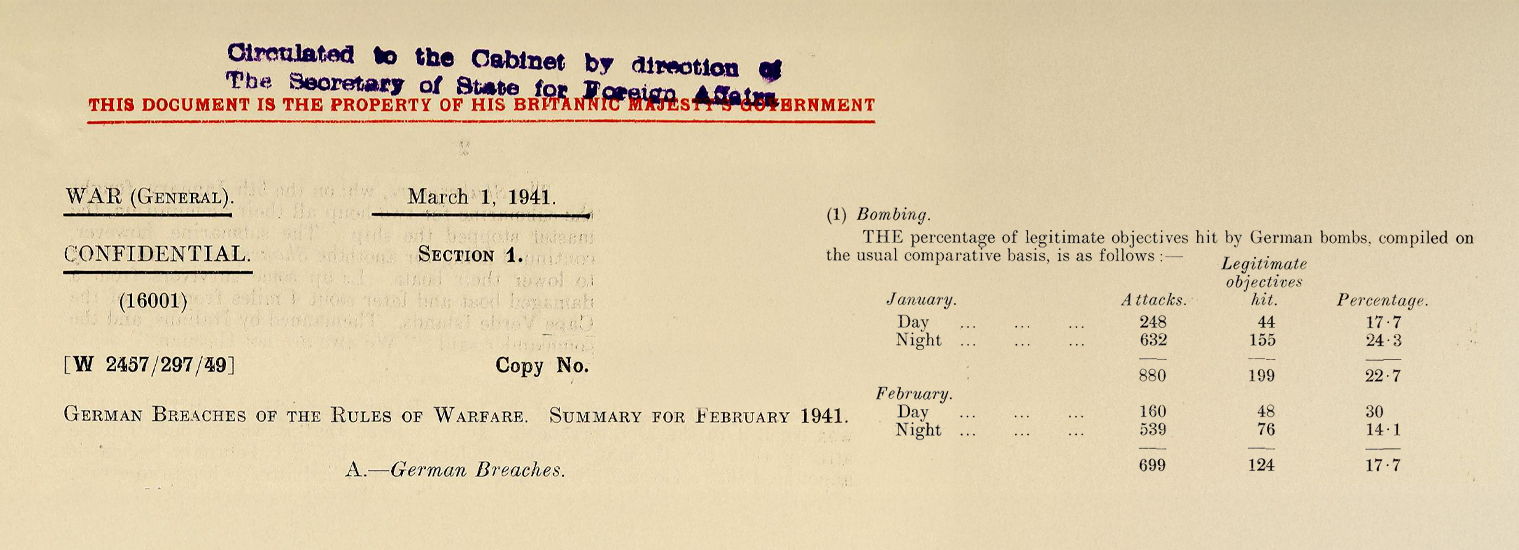
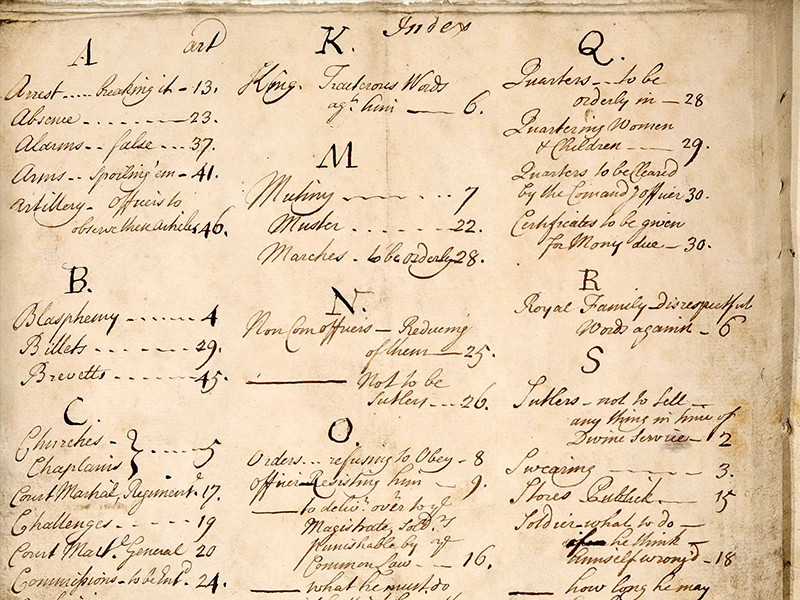
One of the oldest documents in this collection, these “Rules and Articles for the better Government of the Horse and Foot Guards and all other His Majesty’s Land Forces” date from 1718 and were signed by King George I. They begin by stipulating the importance of religious worship and forbidding blasphemy, but also cover offences such as mutiny, desertion, and insubordination.
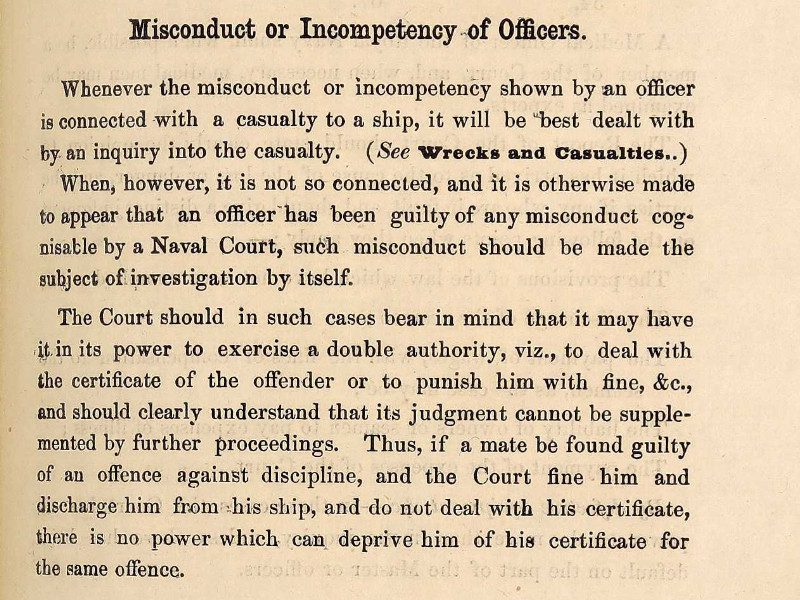
Moved by the horrors he had witnessed during the Battle of Solferino in 1859, the Swiss activist, Henry Dunant, called for an international conference to discuss better care for the wounded during war. This resulted in the First Geneva Convention of 1864, to which Britain acceded a year later. This file contains correspondence relating to subsequent amendments to the Convention in the years following.
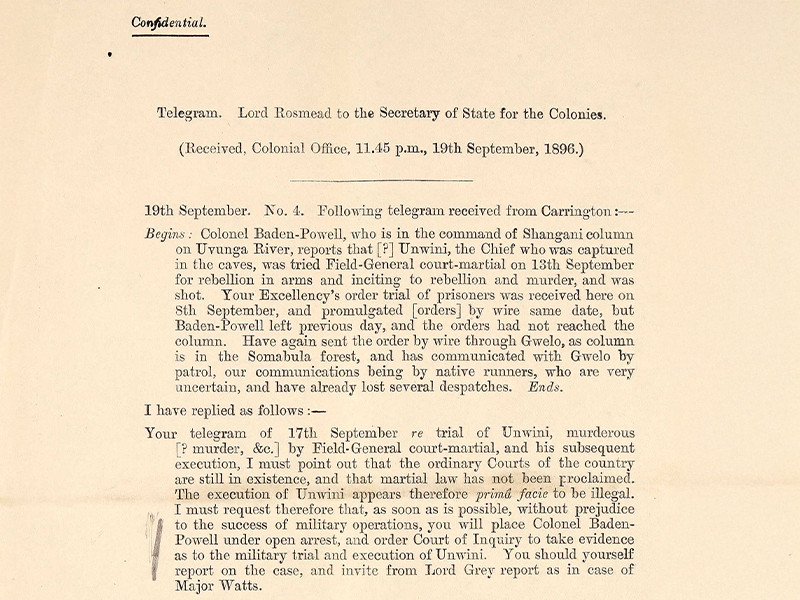
Robert Baden-Powell, who would later find fame as the founder of the Boy Scout movement, served in a number of military campaigns in British colonies. In 1896, as this document details, he was arrested for the unlawful execution of Uwini, a Makalaka tribal leader from present-day Zimbabwe, who was in revolt against the British. Baden-Powell ultimately escaped without charge or penalty.
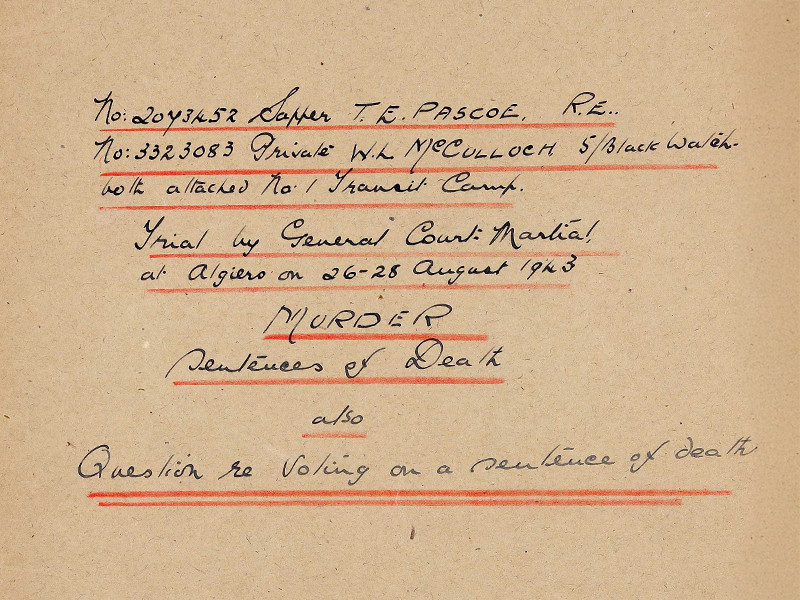
This file details the case of two British soldiers who were tried for the murder of a local civilian, while serving in Algeria in 1943. They were found guilty and sentenced to death, but their appeals against the outcome of the trial reveal much about the policies, procedures, and shortcomings of military justice, as well as the moral context in which it was applied.
Military justice is not static, nor does it exist in a vacuum. Rather, it is always adapting to reflect changing political, social, and moral norms and it can be altered dramatically by the context of the specific conflict in which it is being applied. Among the great strengths of this collection are its broad chronological span and the changes it documents as a result. Technological developments, such as the use of chemical weapons and the advent of aerial bombing, necessitated entirely new codes of conduct and practice in wartime.
Alongside its chronological range, this collection also benefits from its coverage of military actions across the British empire, which are discussed in great depth. The number and diversity of these examples—from targeted counter-insurgencies, such as against the Maori in the New Zealand; to major challenges to imperial rule, such as the Boer War; to the deployment of colonial troops during the two world wars—mean that the complex interplay between concepts of military justice and the structures of British colonialism can be explored extensively.
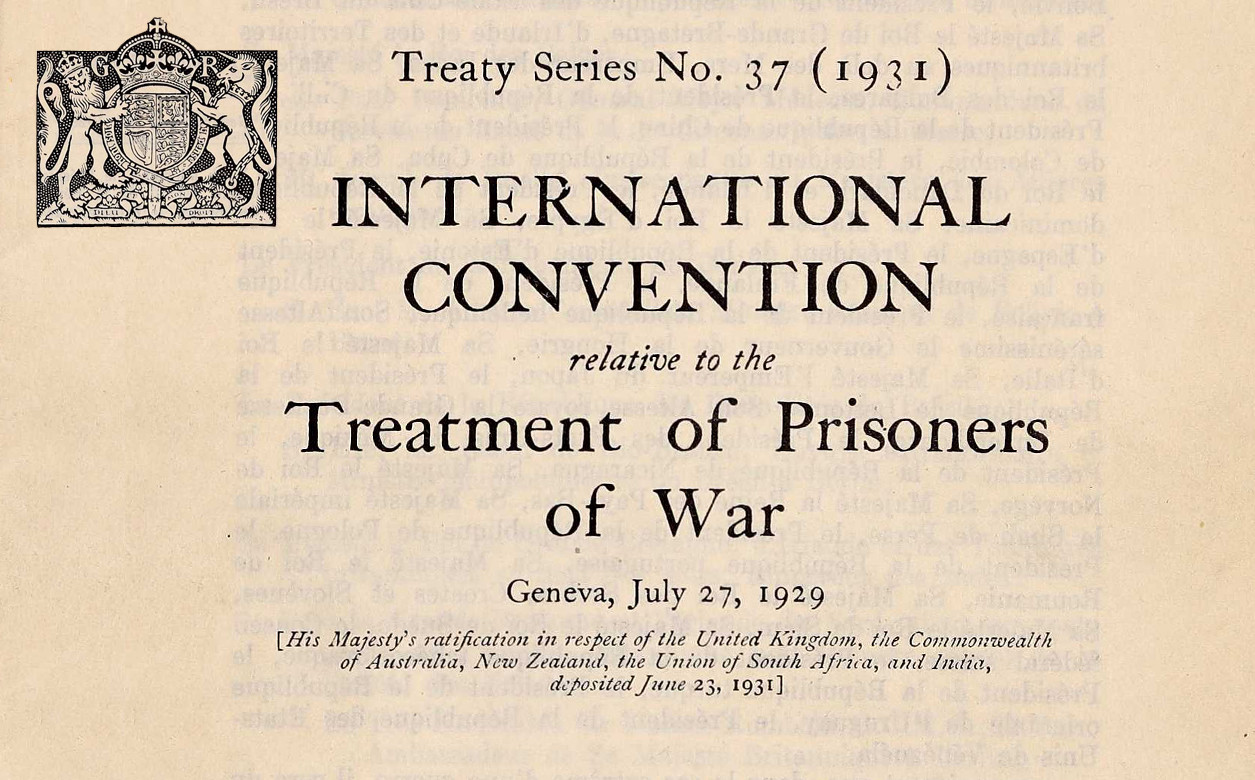
One of the top priorities in the development of laws of war has been the protection of especially vulnerable groups. Top of the list are civilians. One aspect of this is the creation of a strong theoretical distinction between combatant and non-combatant, though this separation is not always easy to sustain in the midst of a conflict. Prisoners of War (POWs) are also the beneficiaries of specific safeguards, as are wounded soldiers, the poor treatment of whom first prompted the creation of the International Committee of the Red Cross in 1863.
The end of the Second World War brought revelations about the extent of Nazi atrocities and posed a major challenge to existing international war crimes legislation. The trials of major German war criminals, conducted by the victorious Allies and detailed across a number of files in this collection, show how an entirely new legal framework emerged to bring these perpetrators to justice. Indeed, the term “crimes against humanity” was coined as part of these proceedings to give a fitting name to the scale and horror of Nazi actions.
Provide your students and researchers with direct access to unique primary sources.