Our New Purchasing Scheme is Open! Until 31 July 2026, grab a 20% discount on 20 of our most popular collections! ✕
Liverpool Shipping Records: Imports and Exports, 1820–1900
Liverpool Customs Bills of Entry, 1820–1900
During the eighteenth century, the wealthy city corporation poured millions of pounds into constructing wet docks that became the envy of other British ports. Liverpool rose to prominence demographically and commercially in this period.Professor Kenneth Morgan,
Access the full collection
Access the full archive of Liverpool Shipping Records: Imports and Exports, 1820–1900.
Institutional Free Trial
Start your free trialRegister for a free 30-day trial of Liverpool Shipping Records: Imports and Exports, 1820–1900, for your institution.
Institutional Sales
Visit Sales PagesellFor more information on institutional access, visit our sales page.
Single User License
Purchase a license below to view the full collection.
Already have a license? Sign in.
Explore Liverpool’s Success as a Major British Port
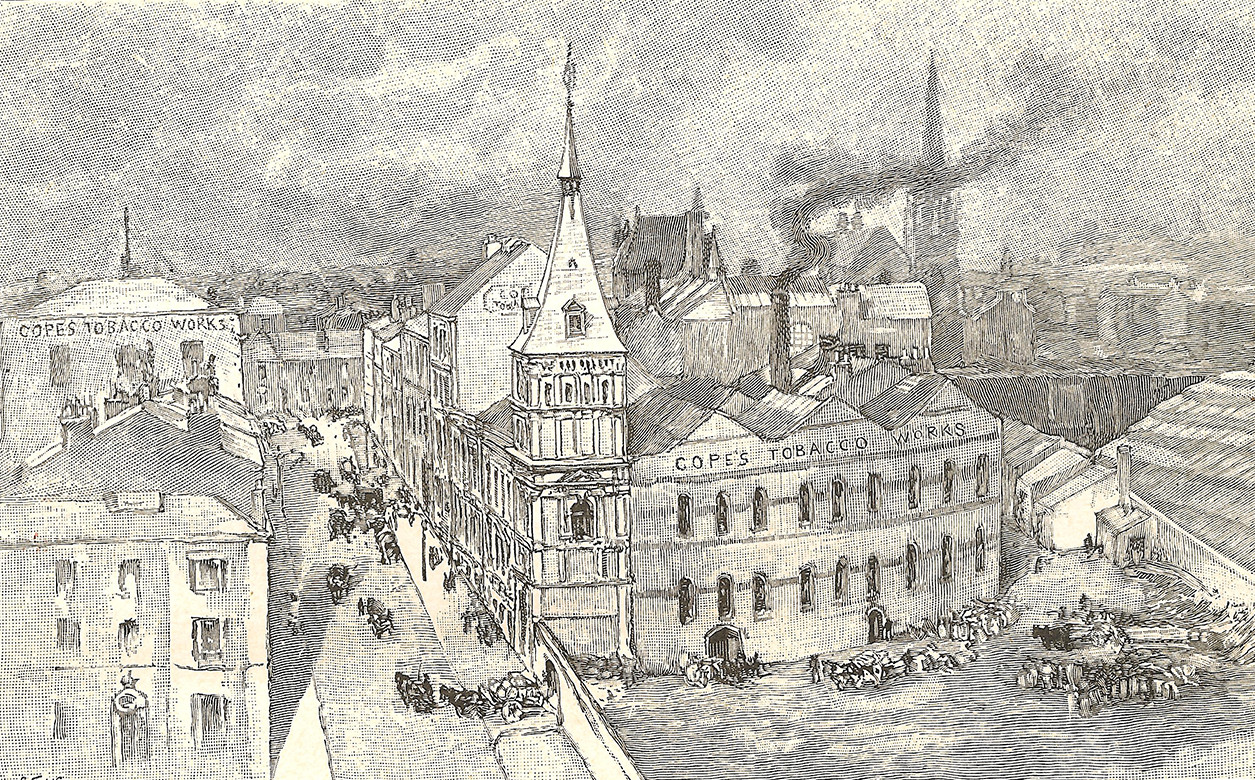
Containing over 85,000 document images, Liverpool Shipping Records: Imports and Exports, 1820–1900, charts 80 years of merchant shipping to and from the city of Liverpool. This collection comprises Bills of Entry derived from the reports and manifests of ships that docked in the city. These detailed documents offer unique insights into Liverpool's maritime history and the goods traded in the city throughout most of the nineteenth century.
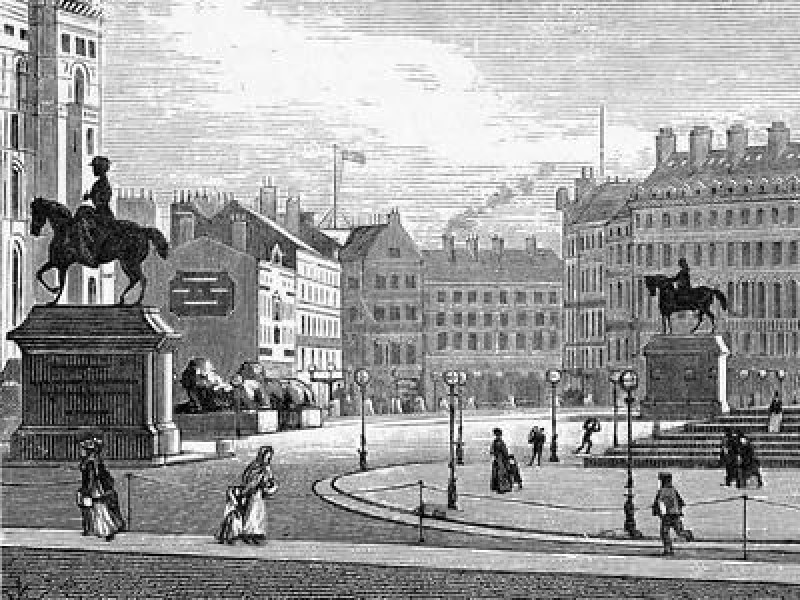
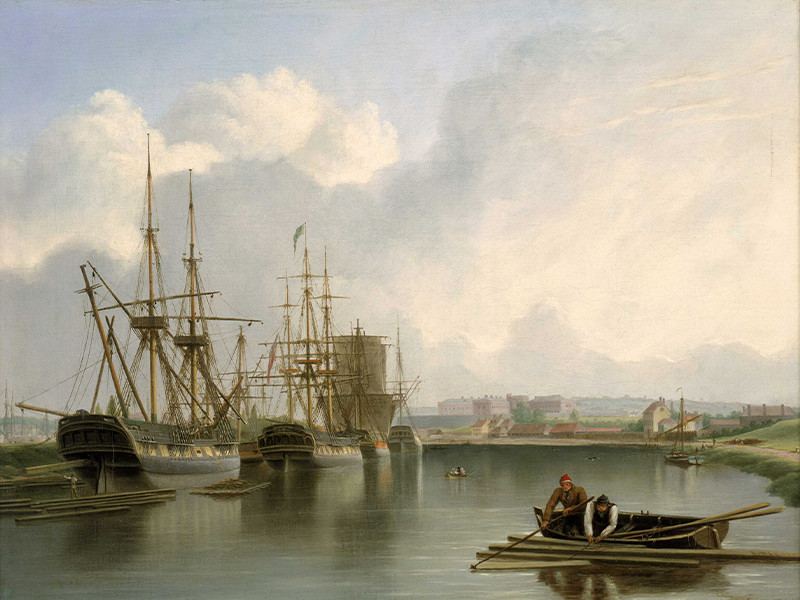
The prosperity of Liverpool during this period was built on its success as one of Britain’s major docks. In the early eighteenth century, the city's merchants supplemented their existing trade links with Ireland and Europe with voyages around the Atlantic.
Liverpool became heavily involved in various imperial trade networks, including those concerned with cotton, indigo, rice, rum, sugar, and tobacco. Many of the goods traded in the city were derived from the labour of enslaved people—Liverpool and its merchants were major players in the transatlantic slave trade. By 1800, the city was the largest slave trading port in the world and much of Liverpool's wealth and development relied upon enslavement and this triangular trade.
This fascinating collection provides students, educators, and researchers with a comprehensive survey of how Liverpool, and the wider economy of the United Kingdom, interacted with and influenced global trade networks.
Contents
Liverpool Shipping Records: Imports and Exports, 1820–1900...
Liverpool Customs Bills of Entry, 1820–1900
Discover
Highlights
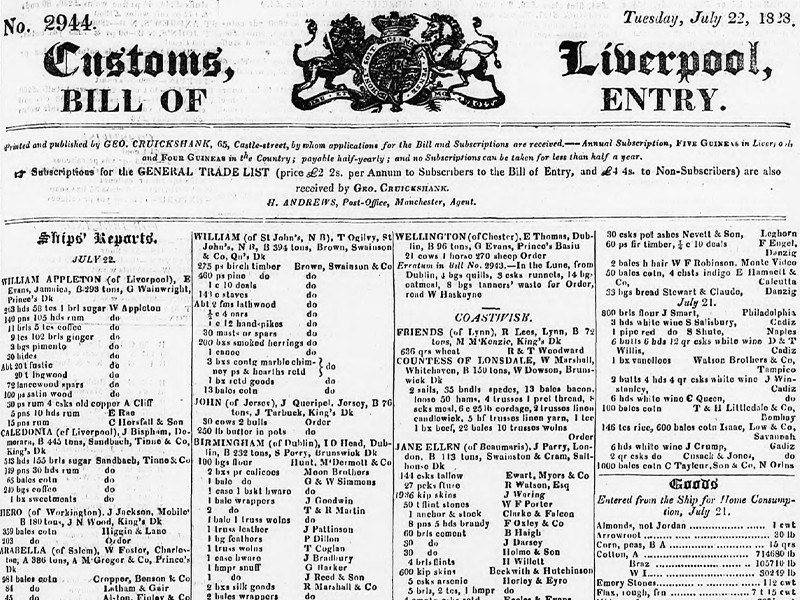
Licensed to access Bills of Entry (1828)
Part of the Sandbach, Tinne, & Co. dynasty, the Sandbach family were heavily involved in trading commodities cultivated by enslaved people in the Caribbean and South America. The family owned at least two cotton plantations in Demerara. They were awarded large amounts of financial compensation following the abolition of plantantion slavery throughout the British empire in 1833. This document (image 351) lists sugar, rum, cotton, and coffee imported by the company.
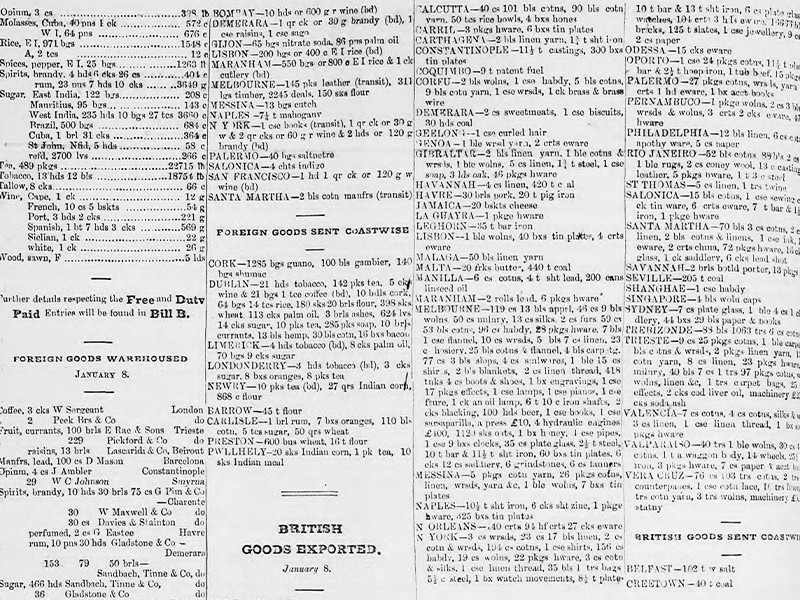
Licensed to access Bills of Entry (1858)
Established in 1600, the East India Company sourced cardamom, cinnamon, cloves, nutmeg, turmeric, and pepper from across the Indian subcontinent and Southeast Asia. Lucrative and undoubtedly exploitative, the spice trade formed a significant component of Britain’s economic development. This document (image 41) lists 25 bags of spices imported into Liverpool from India.
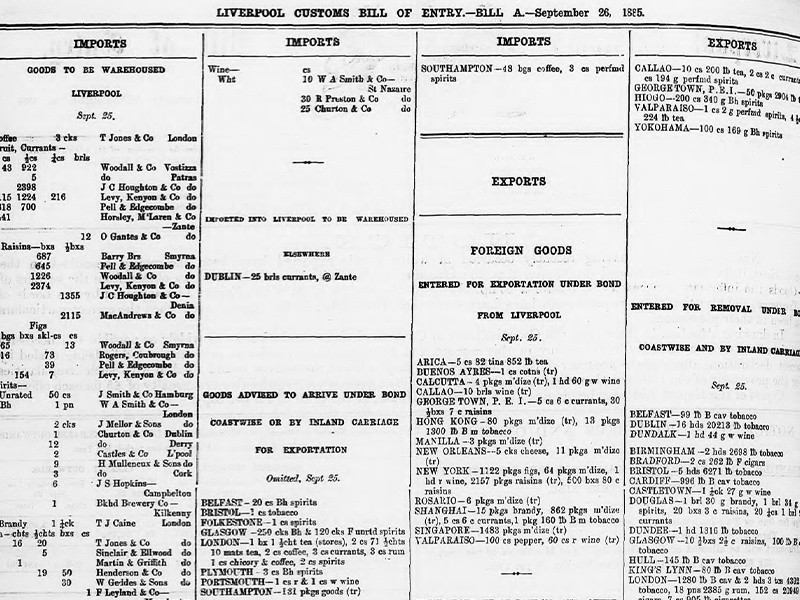
Licensed to access Bills of Entry (1885)
Founded in Liverpool in 1860 by Thomas Ogden, Ogden's Tobacco Company became one of the largest tobacco manufacturers in the country. Over time, Ogden established six tobacco factories in the city. This document (image 1070) lists 50 barrels of tobacco that were imported from Rotterdam by the company.
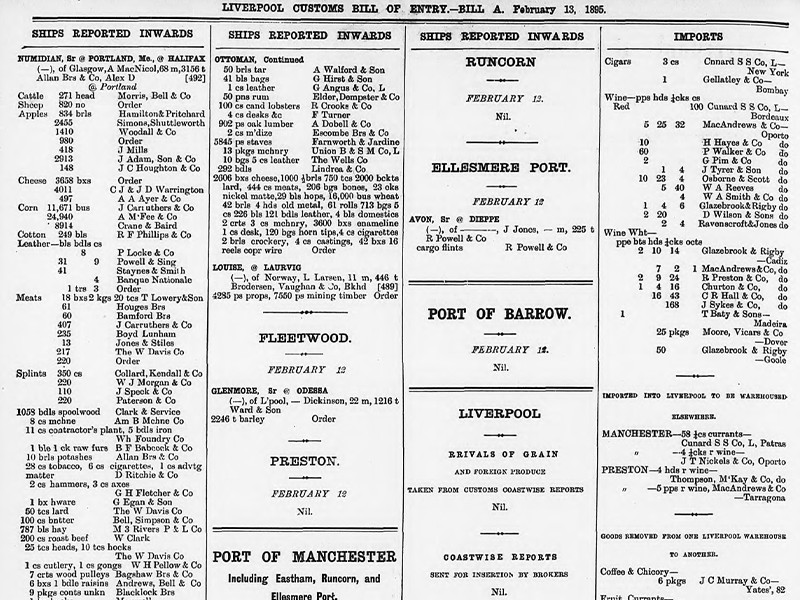
Licensed to access Bills of Entry (1895)
Lamport and Holt made their fortune by shipping coffee between Brazil and North America, developing a virtual monopoly. The coffee that they traded was largely cultivated by enslaved people. This exploitation continued after slavery was abolished in Brazil in 1888 through indentured labour schemes. This document (image 208) lists 128 bags of coffee imported by the company into Liverpool.
Insights
Bills of Entry are printed records of imports and exports. The first Bills of entry for Liverpool were printed around 1750. Over time, they became more extensive, eventually serving as business newspapers for the local commercial community. By the late 1840s, the Bills were printed daily, except for Sundays, giving a comprehensive overview of maritime trade in Liverpool. The documents in this collection contain detailed information, such as the names of ships, where they arrived from and where they embarked for, their captains, their tonnage, their date of arrival and departure, cargo details, as well as the names of the people and companies associated with each shipment.
The sources in this collection provide a detailed overview of the nature and development of Liverpool’s trade routes and relationships. They also highlight how trading priorities changed over time, particularly during the Industrial Revolution, when Britain began exporting large volumes of goods manufactured using new technologies and processes. Crucially, the sources also illustrate how Britain’s commercial interests and networks laid the foundations for a vast, global empire.
The sources in this collection detail key imports and exports entering and leaving Liverpool. For example, pimento and logwood were shipped to Britain from Jamaica, while mustard seeds, liquorice root, and saffron came from India. Bacon and lard made their way from New Orleans, and wine, lemons, and oranges were imported from Spain. Meanwhile, Britain exported tobacco, paint, and sewing machines to Africa; cotton, soap, and tools to Singapore; whilst wine, leather, and glassware were shipped to Brazil.
Liverpool was a major slave trading port during the eighteenth century. This changed after the abolition of the slave trade in 1807 and, subsequently, the end of plantation slavery in most British colonies after 1833. Cotton therefore became the most important commodity in Liverpool. In 1784, the first cotton from North America arrived in the city. By 1850, over 1.5 million bales of cotton were imported from America to Liverpool every year and cotton accounted for almost half of the city’s trade. This boom relied upon cotton produced from the labour of enslaved people, as slavery was not abolished in North America until 1865. Mills across Lancashire transformed this cotton into finished goods, which were exported across the globe from Liverpool’s docks.
Unlock Historical Research for Your Institution
Provide your students and researchers with direct access to unique primary sources.