Our New Purchasing Scheme is Open! Until 31 July 2026, grab a 20% discount on 20 of our most popular collections! ✕
Conscientious Objection During World War 1 - Volumes
Volumes
2 volumes in Conscientious Objection During World War 1
No-Conscription Fellowship
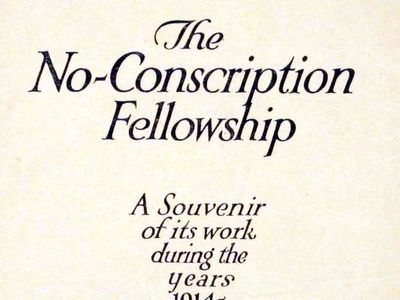
The No-Conscription Fellowship (NCF) was arguably the most important of the anti-war movement's organisations. From the very beginning of the war there were those who felt that it was unlikely the British war effort would be sustained by an entirely volunteer army and that conscription would soon replace voluntarism. Co-ordinating opposition to conscription and supporting potential COs began as an idea launched by Fenner Brockway. At the outbreak of war he was editor of the Independent Labour Party's newspaper, the Labour Leader. In November 1914, he published an appeal inviting all young men who intended to refuse military service to join a 'No-Conscription Fellowship'. The response was encouraging. By February 1915 the NCF had 339 members and the names of a number of men beyond military service age who were prepared to help. Originally organised by Fenner Brockway and his wife Lilla from their house in Derbyshire, the flow of new members and its developing work prompted the opening of a head office in London later that summer and by the autumn of 1915 it had been organised on a national basis. From then until the early months of 1920 it worked to organise opposition to the war and to support COs.This collection of NCF material contains:NCF National Committee material;Letters and circulars from NCF Headquarters to local branches, 1917 - 1920;NCF Publications, 1914 - 1919;The Tribunal, 1916 - 1920;Conscientious Objector Information Bureau (COIB) Reports, 1916 - 1919;NCF branch records including Hyde, Cheshire and the Manchester region as well as those of Willesden, Middlesex (now Greater London). Read more →
Union of Democratic Control
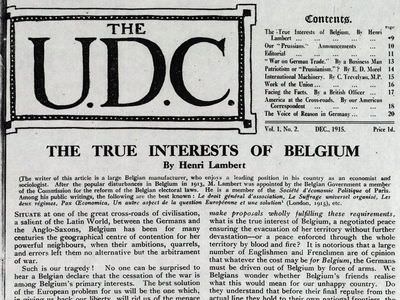
The Union of Democratic Control (UDC), as its name implies, was primarily concerned about the lack of democratic accountability in the making of British foreign policy. Its prime target was what was seen as the processes of 'secret diplomacy' which had drawn Britain into the war. Beginning with the publication of its manifesto in 1914, it campaigned throughout the war and continued to press its case during the inter-war years and beyond. It developed an extensive local organisation, with at least 100 UDC branches across Britain and, by 1917, had more than 10,000 members. Its credibility was further reinforced by the presence on its Executive Committee of men and women who were at the heart of national politics - Charles Trevelyan MP, Arthur Ponsonby MP, Ramsay MacDonald MP, Philip Snowden MP, Helen M. Swanwick, Norman Angel and campaigning journalist E. D. Morel who was its first Secretary. Read more →
Unlock Historical Research for Your Institution
Provide your students and researchers with direct access to unique primary sources.
