"Whatever men do, or say, or think, or dream, our motley paper seizes for its theme"
The Edwardian era was a time of booming trade, of great prosperity and wealth in which the pageant of London Society took place year after year in a setting of traditional dignity and beauty.
Violet Bonham Carter, British politician and diarist
Explore British high society, from the turn of the twentieth century to the "Swinging Sixties"
From its establishment in 1901 until 1968, The Tatler was one of various publications owned by The Illustrated London News(ILN). The magazine (founded by literary critic, Clement Shorter, a former editor of the ILN) catered primarily to an affluent and traditionalist audience. Appearing on a weekly basis, and enduring two world wars, The Tatler (known as The Tatler and Bystander from 1940) kept its readership abreast of the latest developments in British high society. Consisting of more than 250,000 images, and comprising over 3,000 issues from July 1901 to September 1965, this publication forms the largest collection in British Illustrated Periodicals, 1869–1970.
Focusing mainly on fashion, theatre, and sports (especially cricket and golf), The Tatler habitually regaled readers with news and gossip about Britain’s most prominent socialites, including aristocrats, athletes, and actors. Featuring articles on mainstays of American and European cinema, such as Anita Page and Marlene Dietrich; sports stars, such as tennis champion, Kathleen McKane Godfree; and key political figures, such as Winston Churchill, The Tatler usually reported on Britain’s most exclusive circles. At the same time, it printed regular contributions from celebrated theatre critics, such as James Agate, and illustrations by artists, such as Henry Mayo Bateman, one of the country's most acclaimed caricaturists. As a result, this collection yields valuable source material for researchers and students of British society during the early-to-mid twentieth century, and of Britain's wealthy and powerful elite.
Contents
The Tatler, 1901–1965...
"Whatever men do, or say, or think, or dream, our motley paper seizes for its theme"
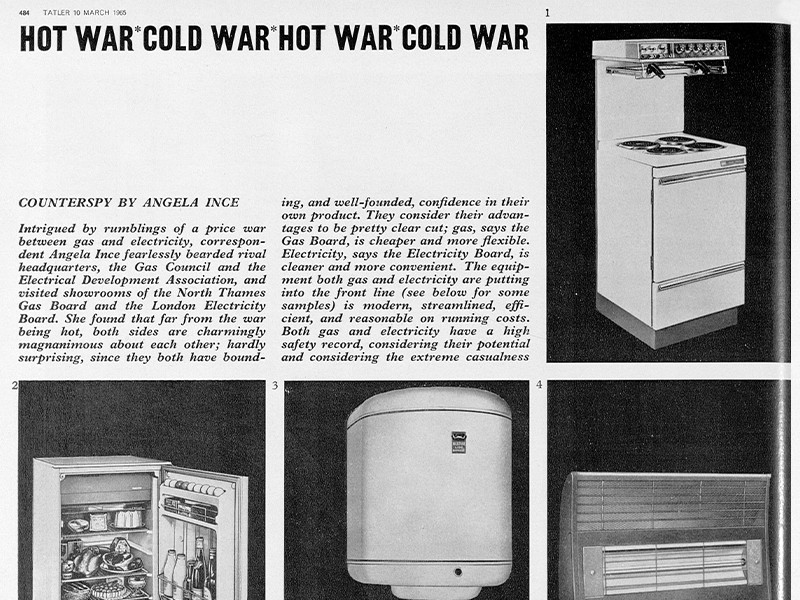
Parodying the geopolitical tensions of the Cold War, this article (images 46) portrays the "price war" raging between electric and gas suppliers in 1960s London. At the same time, it reflects the gendered division of labour in Britain’s homes.
Licensed to access
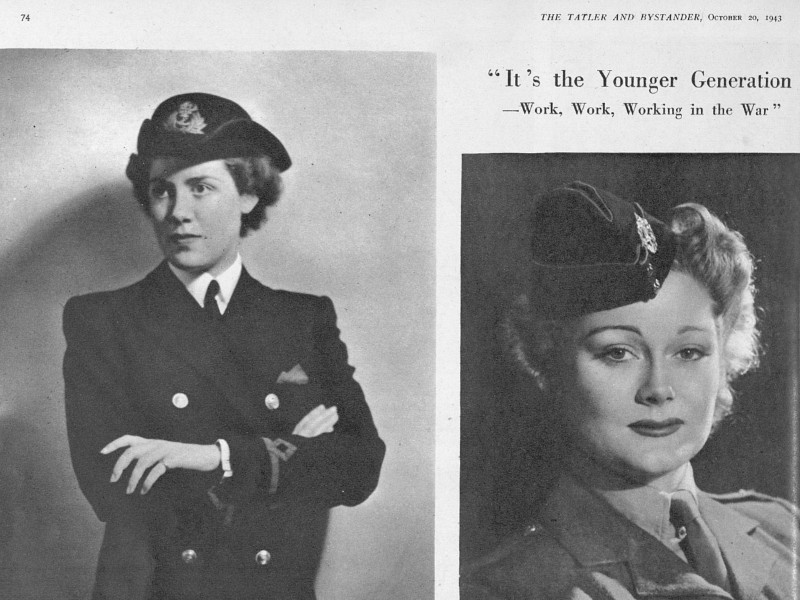
"It’s the Young Generation – Work, Work, Working in the War"
20th October 1943:
Despite its ostensibly conservative outlook, The Tatler conveyed the significant social and cultural changes occurring across the country, especially in wartime. This piece (images 12-13) reveals the wide variety of roles that women played in Britain’s armed forces during the Second World War.
Licensed to access
"The Rayon Story"
8th April 1953:
This article (images 39-41) highlights the rise of synthetic fibres – in this case rayon – in the fashion industry from the mid-twentieth century onwards, before concerns about sustainability and the environment became more prevalent.
Licensed to access
"I'm not vaccinated"
29th January 1902:
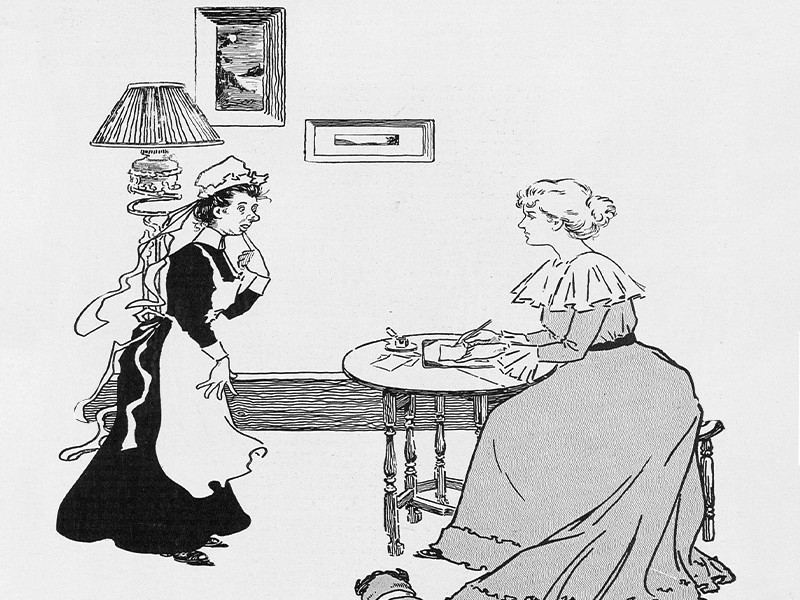
Printed during an outbreak of smallpox in 1901-1902, this cartoon (image 13) highlights the vulnerability of those who had not been vaccinated against the disease, whilst also illustrating the profound social inequalities of Edwardian Britain.
Insights
The Tatler took its name from a publication founded by Richard Steele, in 1709. The earlier iteration of The Tatler had survived for just two years and, in contrast, Clement Shorter’s magazine sought to not only emulate, but surpass, its namesake. The editors declared that: "We wish our Tatler to take a permanent place in public esteem, living and dying week by week throughout the ages".
From the beginning, The Tatler adopted a conservative outlook and style. In its first issue, in July 1901, it stated explicitly that "the public mistrusts originality". Nevertheless, the magazine evolved over the years and, in October 1965, it was re-launched as London Life, a publication which would become emblematic of Britain’s "Swinging Sixties".
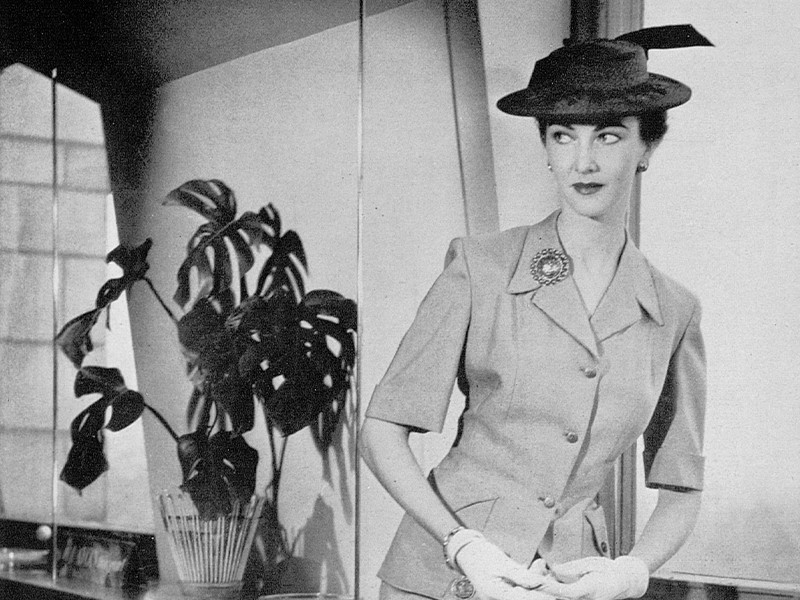
Throughout this collection, The Tatler allows regular glimpses into the glamourous lives of the rich and famous, reporting on the latest debutante balls, engagements, weddings, and other exclusive social events. Crucially, the articles consistently focus on high fashion, informing readers of the latest trends in cities such as London and Paris, and advertising both clothing (for all occasions) and beauty products.
From its inception, The Tatler printed extensive coverage of the arts, including reviews of contemporary novels and plays, appraisals of opera performances, and reflections on cinema. Its coverage was highly eclectic and conveyed the development of popular art forms over time, from the music of French composer Cécile Chaminade to Russian ballet; and from silent films to 1960s thrillers.
Although it did engage with serious issues (such as class struggle, inequality, and war) The Tatler’s genial tone remains one of its most distinctive characteristics. As the Westminster Gazette stated, shortly after The Tatler’s establishment, the magazine "touches society at many points and in each case lightly, brightly and in excellent taste". For example, during the First World War, the editors renamed the regular "Weddings and Engagements" section to "Cupid in War Time".
Charting the rise of the consumer society in Britain, from the turn of the twentieth century until the ‘ad revolution’ of the 1960s, The Tatler shows how the nature of advertising changed significantly during this period, developing new aesthetics and targeting new audiences. Specifically, the collection features adverts from a wide range of companies still operating today, including Schweppes, Guinness, Kodak, and Selfridge’s.
The Tatler has, since its original form in the early eighteenth century, been a publication concerned with status and social ideals. The original Tatler was very much focused on guiding the emerging middling sort on how to behave in a variety of public and private situations, and this ‘guide to life’...
Read more →
The hundred years from the 1860s to the 1960s, covered in this collection, was in many respects the golden age of the print media in Britain. In the middle decades of the nineteenth century, a number of social, cultural, and political developments combined to provide the platform for a huge...
Read more →
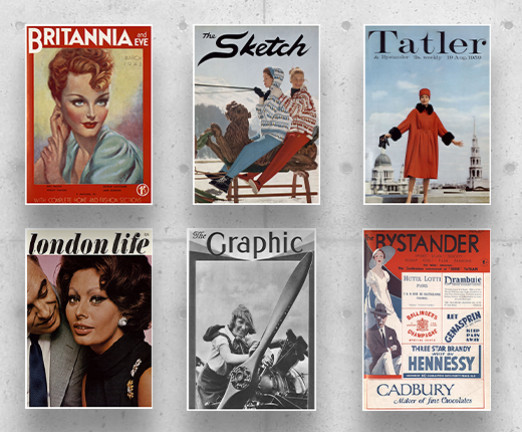
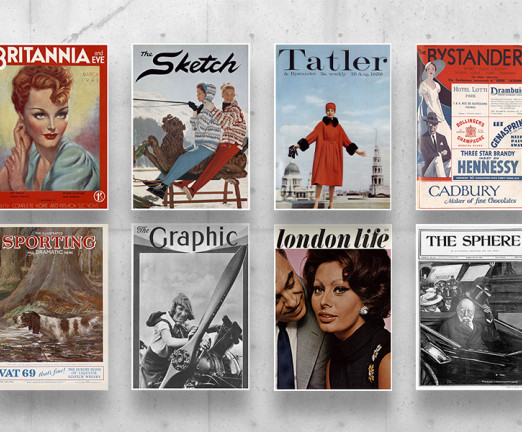
British Online Archives (BOA) is pleased to announce the completion of our extensive primary source collection: British Illustrated Periodicals, 1869–1970. This brings together the back catalogues of nine “sister” titles belonging to the Illustrated London News (ILN): The Graphic (1869–1932); The Illustrated Sporting and Dramatic News (1874–1970); The Sketch (1893–1959); The Sphere (1900–1964);...
Read more →
British Online ArchivesPublished 3rd January, 2024
British Online Archives (BOA) is pleased to announce the release of the first season of our podcast, Talking History with British Online Archives, in which we explore the past from a variety of angles and perspectives. This season comprises six episodes and will be released in bi-weekly instalments.
Read more →
British Online ArchivesPublished 1st October, 2024
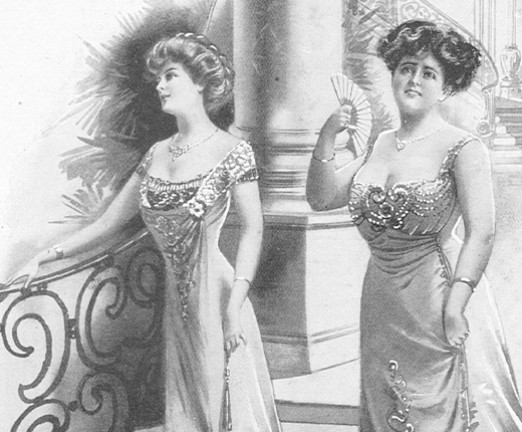
Our latest “Document of the Week”, chosen by our Editor, Nishah Malik, offers a striking glimpse into the early twentieth-century origins of diet culture in British print media. Featured in The Tatler in 1909, this advertisement for the slimming tonic, Antipon.
Read more →
_1655826358-160x160.jpg)



.svg)