Survey over sixty years of British and global history, from the decline of the empire to the World Wars
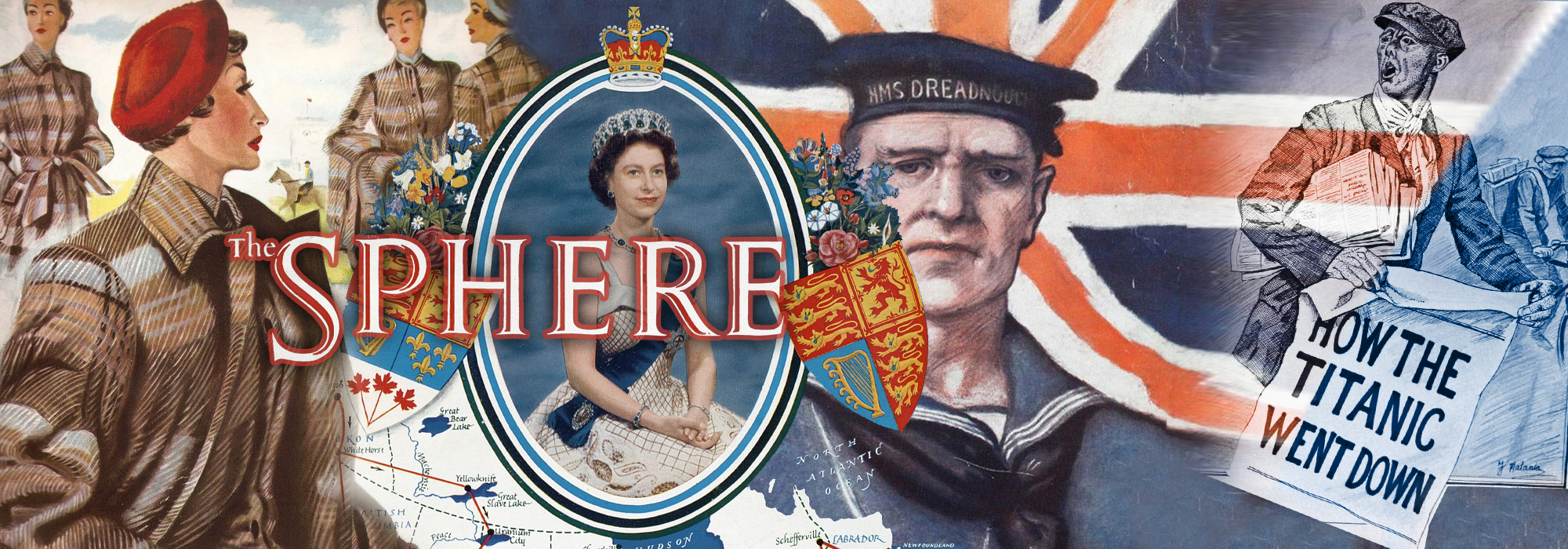
Established in 1900 and in circulation until 1964, The Sphere remained under the ownership of The Illustrated London News (ILN) for most of its existence. Clement Shorter—a former editor of the ILN—founded the publication. From its first issue, it adopted a consciously international outlook, aiming to "hold pictures and thoughts from all lands". Upon its release, it was praised as "a striking advance in illustrated journalism" due to the beauty and artistry of its presentation. It soon became popular. This collection includes nearly 160,000 images and almost 4,000 issues from The Sphere, published between January 1900 and June 1964.
The Sphere reflected a patriotic and staunchly pro-establishment position, expressing support for the British monarchy and for the empire. The publication reported extensively on world events, such as the rise of communism, the First and Second World Wars, and the Arab-Israeli conflict. It printed articles discussing a wide range of prominent personalities from the arts, sciences, and politics—from John Ruskin to Albert Einstein; from Franklin Delano Roosevelt to Golda Meir. It also featured contributions from well-known literary figures, such as the acclaimed children’s author, A. A. Milne, and the prolific journalist, Charles Graves. This collection contains vital material for researchers and students of British society, military history, and the legacies of colonialism.
Contents
The Sphere, 1900–1964...
"The centre of The Sphere will be in London, but its surface will hold pictures and thoughts from all lands." The Sphere, 27 January 1900
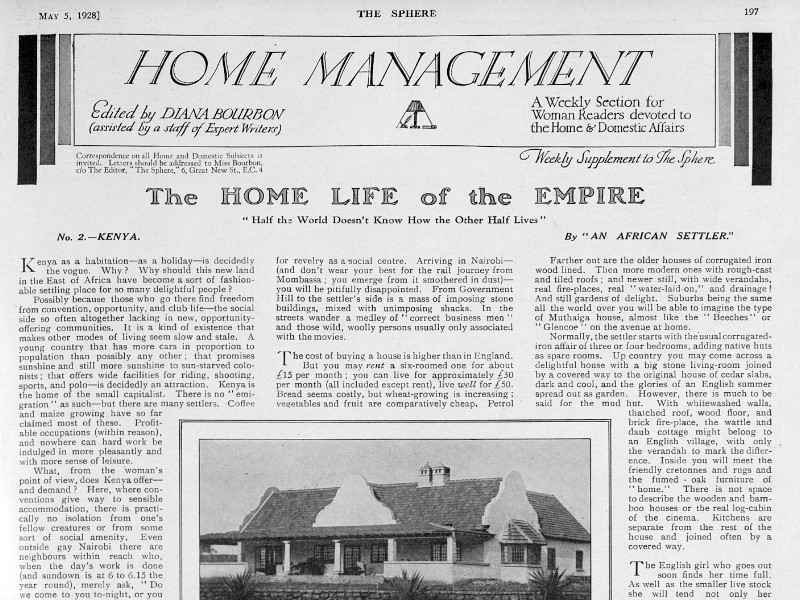
Putting into stark relief the exploitative nature of British colonialism in Kenya, this article (image 3) illustrates the aloof, patrician attitude towards the indigenous peoples that was adopted by wealthy settlers. It likewise portrays, in candid detail, the insulated lives of the colonial elite.
Licensed to access
‘A Varied Week at Home’
5 November 1932:
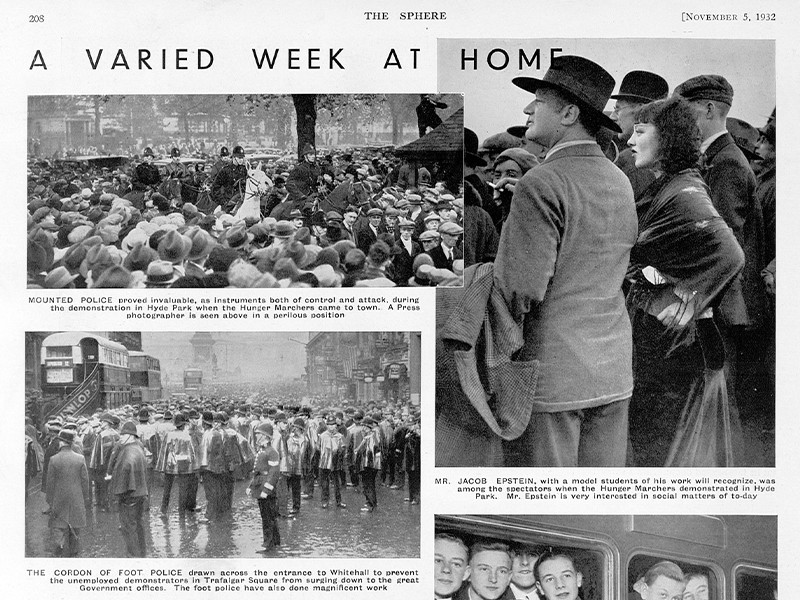
Covering a “Hunger March” and an “oyster feast”, respectively, this article (image 6) encapsulates the rampant inequality within British society in the 1930s. It also evidences the hostile attitude that the country’s establishment adopted towards working-class movements.
Licensed to access
‘The Pre-Invasion Bombing of Europe’
20 May 1944:
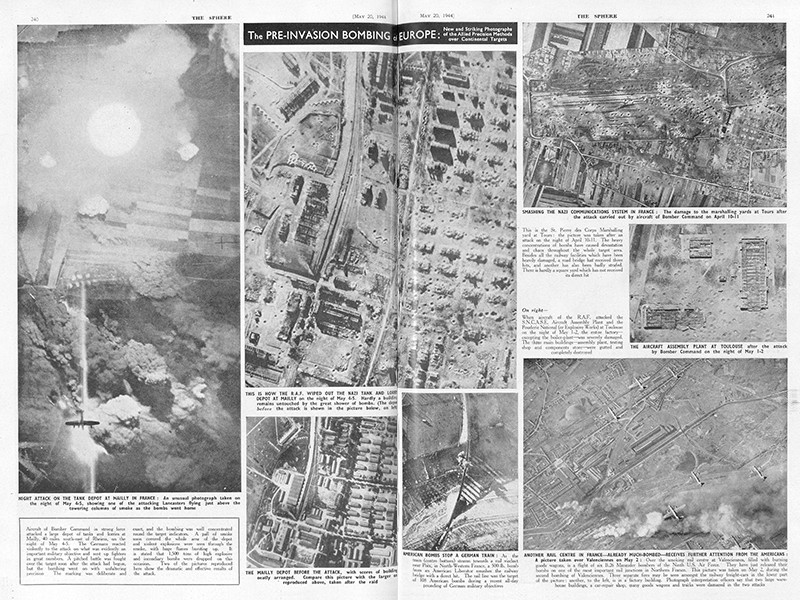
Published shortly before the Allied invasion of Western Europe in June 1944 – a turning point in the Second World War – these “striking photographs” (images 18 and 19) reveal the considerable impact of British and American air raids on German military targets in France.
Licensed to access
‘How the Arabs View the Palestine Problem’
4 October 1947:
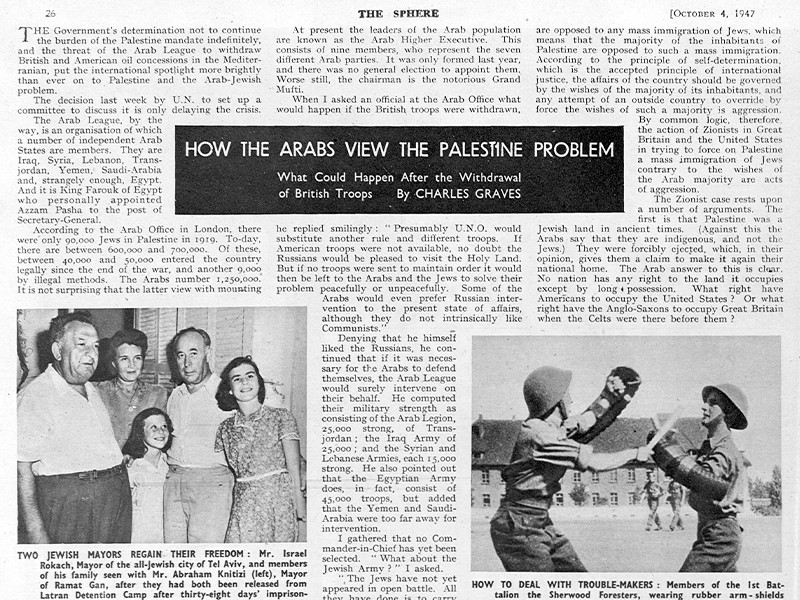
Written towards the end of the British Mandate for Palestine, this article (image 28) provides valuable insights into the complex political tensions that manifested in the months preceding the creation of the State of Israel and the subsequent outbreak of the First Arab-Israeli War.
Insights
Clement Shorter established The Sphere in 1900 after relinquishing his editorship at the ILN. In response, the ILN set up a rival publication called The Spear, choosing a similar title in the hope of poaching Shorter’s new readership. Despite this, The Sphere proved popular and Shorter went on to establish several of the ILN’s "sister" publications, including The Tatler and The Sketch.
The Sphere maintained a conservative and deeply patriotic worldview. For example, in its first issue, published in January 1900, the editors declared that "The Sphere stands for England, the Mother of Parliaments, the Giver of Free Institutions to half the World…" In the 1920s the paper began to refer to itself explicitly as "The Empire’s Illustrated Weekly".
The Sphere often adopted a hostile attitude towards working-class movements. In the process, it (perhaps inadvertently) reflected the profound inequalities prevalent in contemporary Britain. In its coverage of the National Hunger March in November 1932, for example, the paper claimed that mounted police were "invaluable, as instruments both of control and attack". Notably, the same piece reported on Prince Arthur of Connaught’s attendance at a recent "oyster feast".
With the outbreak of the Second World War The Sphere dedicated much of its attention to the evolution and deployment of military technology. Articles about weaponry, including planes, submarines, and warships, began to appear regularly. In addition, the paper published detailed updates from the European, Pacific, and African fronts of the Second World War, thus keeping its readers informed about the latest developments in the Allied campaigns.
Covering nearly seven decades, from the turn of the twentieth century until the "Swinging Sixties", The Sphere offers a wide selection of material with great potential to be highly useful material for those studying the development of British manufacturing and consumerism during this period, with adverts for a range of familiar brands, such as Rolls-Royce, Rowntree’s, and McVitie’s.
The hundred years from the 1860s to the 1960s, covered in this collection, was in many respects the golden age of the print media in Britain. In the middle decades of the nineteenth century, a number of social, cultural, and political developments combined to provide the platform for a huge...
Read more →
The Weekly Illustrated — A Long GestationThe mid-nineteenth century saw the emergence of weekly and monthly illustrated periodicals. These were designed to appeal to middle-class audiences throughout western Europe. They were unique at the time because they mixed informative and entertaining content, making them enjoyable to read. They attracted large...
Read more →
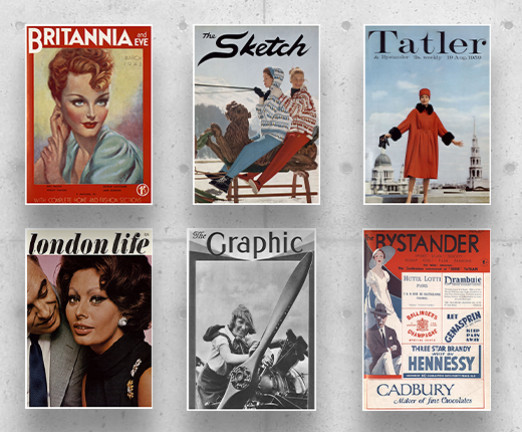
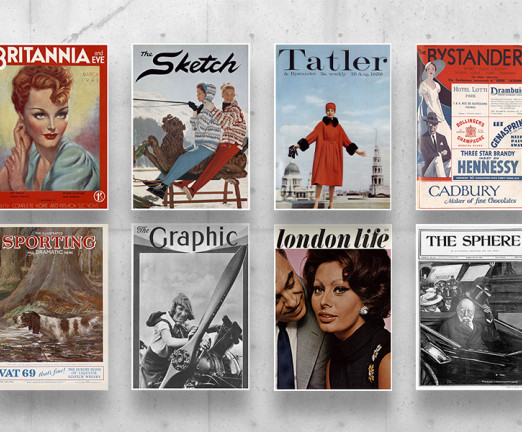
British Online Archives (BOA) is pleased to announce the completion of our extensive primary source collection: British Illustrated Periodicals, 1869–1970. This brings together the back catalogues of nine “sister” titles belonging to the Illustrated London News (ILN): The Graphic (1869–1932); The Illustrated Sporting and Dramatic News (1874–1970); The Sketch (1893–1959); The Sphere (1900–1964);...
Read more →
British Online ArchivesPublished 3rd January, 2024
British Online Archives (BOA) is pleased to announce the release of the first season of our podcast, Talking History with British Online Archives, in which we explore the past from a variety of angles and perspectives. This season comprises six episodes and will be released in bi-weekly instalments.
Read more →
British Online ArchivesPublished 1st October, 2024
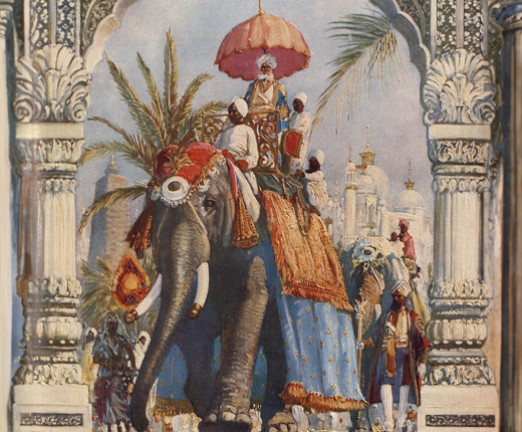
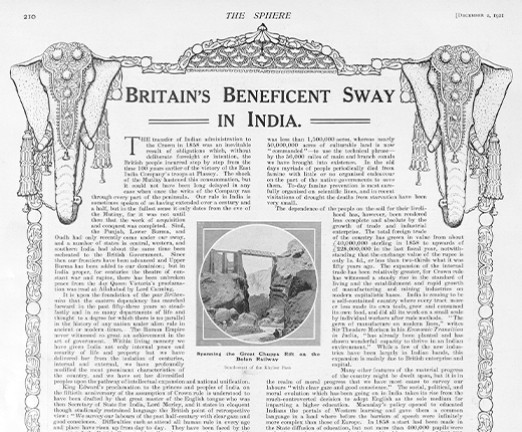
Our latest “Document of the Week” was chosen by our Editor, Nishah Malik. It is an article titled "Britain’s Beneficent Sway in India" from The Sphere. Published on 2 December 1911, this piece encapsulates the British colonial administration's self-congratulatory narrative about its role in India.
Read more →
Our latest “Document of the Week” was chosen by our Editor, Nishah Malik. It is an article titled “Feminine Make Up in India” from The Sphere.
Read more →





.svg)